
I consider myself an adventurous traveler. I usually travel with only carry-on luggage, and I love discovering new cultures, meeting new people, and trying new food. I appreciate both high-end restaurants and hidden hole-in-the-wall spots. There are very few things I don’t enjoy—raw fish and matcha tea, for example. But when my husband was asked to travel to Japan for a consulting project, I ignored these little details and happily tagged along.
TOKYO
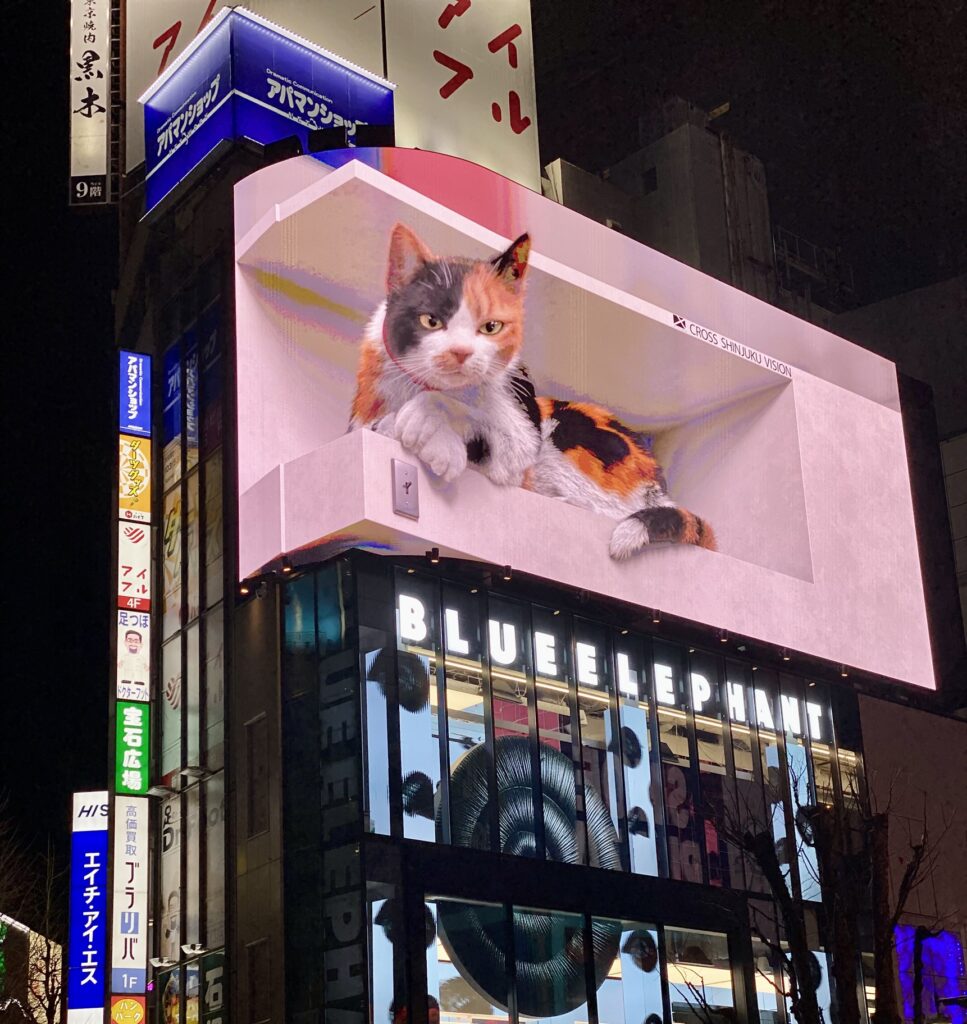
Tokyo is a massive city, home to nearly 14 million people within the city limits alone. Our hotel is in Shinjuku, one of the city’s most central neighborhoods. A short walk from the train station and we’re instantly immersed in a kaleidoscope of energy—music blaring from storefronts, flashing neon signs, crowds moving in every direction, and a giant 3D cat peering down at us from the top of a building.
Even the details are fascinating. The crosswalks chirp with different sounds depending on the direction you’re crossing, and the yellow tactile paving on every sidewalk guides visually impaired residents throughout the city.
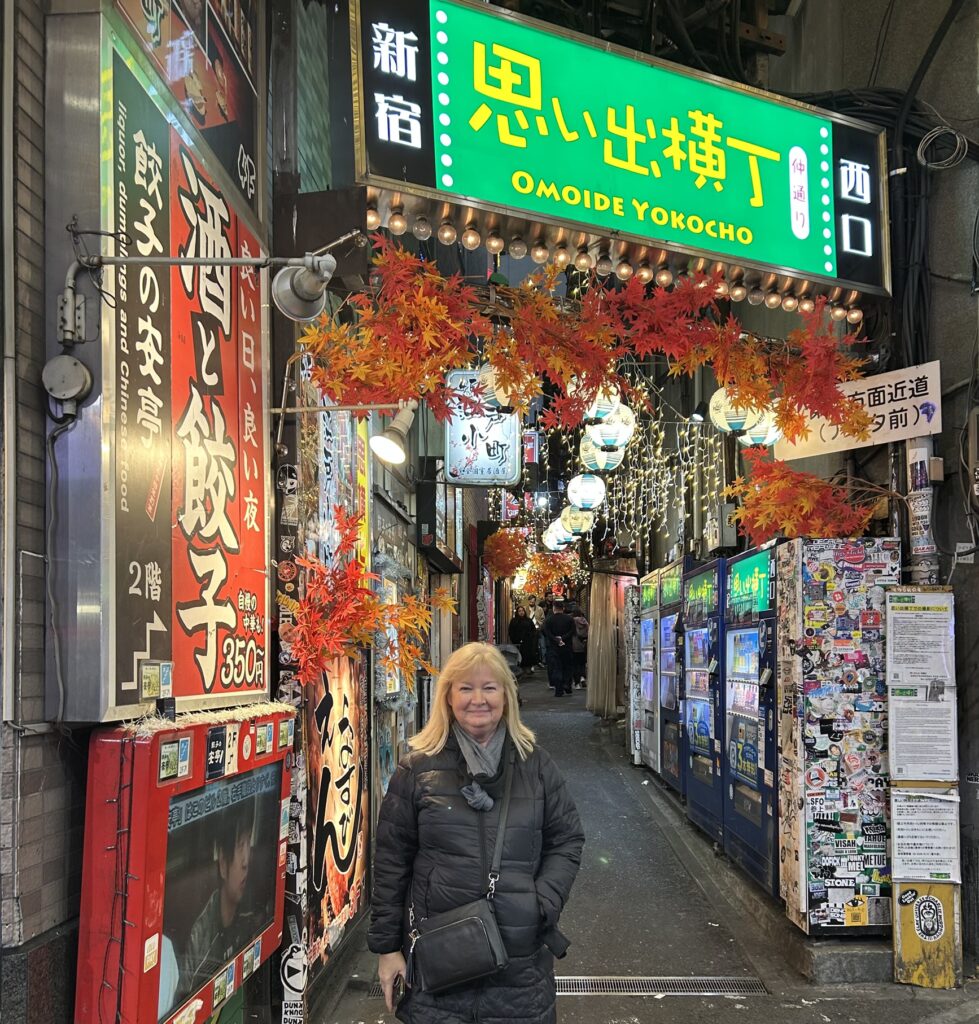
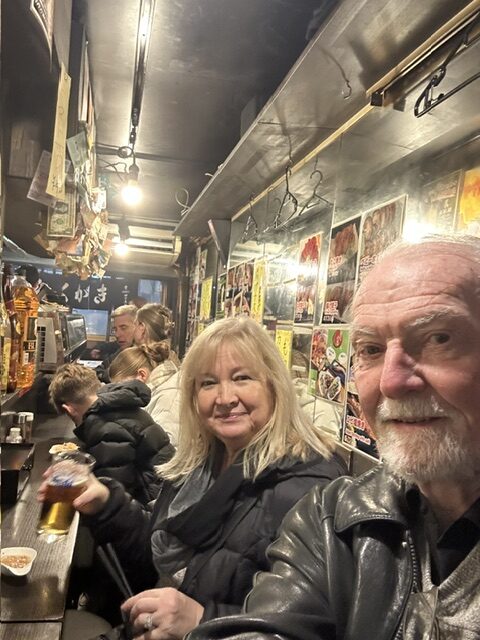
We eventually find ourselves in Omoide Yokocho, a narrow maze of tiny eateries where the smoky aroma of grilled skewers lures in passersby. Most stalls are wonderfully simple: one grill, one cook, and a small wooden counter lined with stools. Menus plaster the walls, proudly advertising specialties like fried octopus, which we eagerly order before moving on to chicken and pork skewers, all washed down with icy Japanese beer. After a long flight, it feels like the perfect cure for jet lag.
SHINJUKU
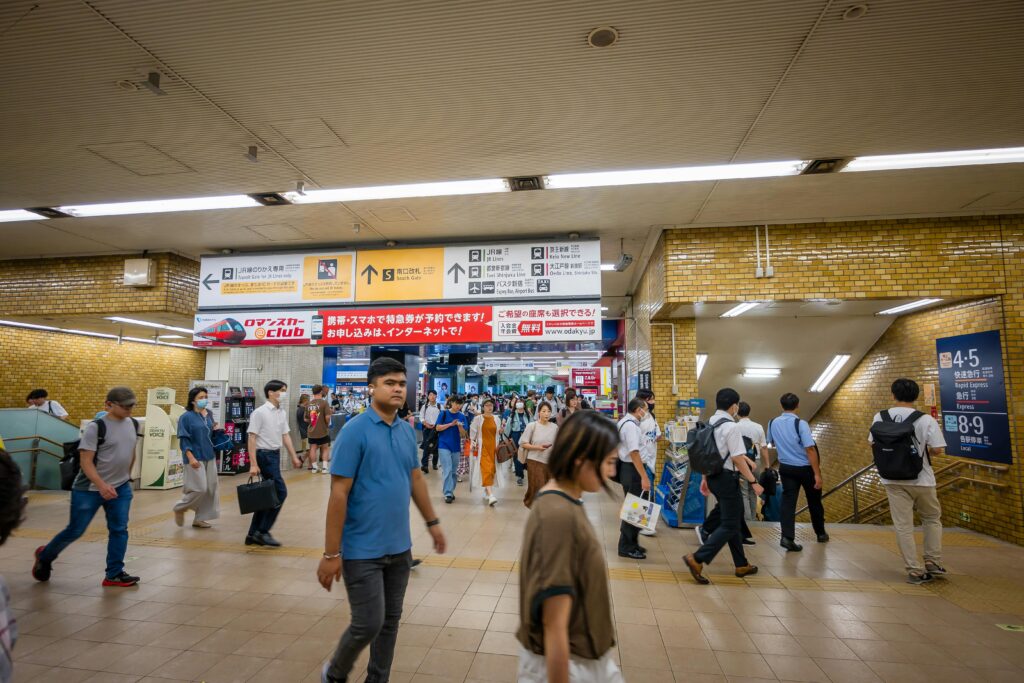
After a good night’s sleep, we are ready to try the ultimate challenge: the dreaded Shinjuku subway station, one of the largest in Asia, with 1.5 million travelers passing through each day. Getting from point A to point B is a challenge—the confusion is real. The hotel reminds us that it’s easy as long as we remember that our return exit from the station is Exit 8. We use our Suica card, a multi-use payment card that can be used for transportation as well as everyday purchases, and we dive in. Survival mode at its best.
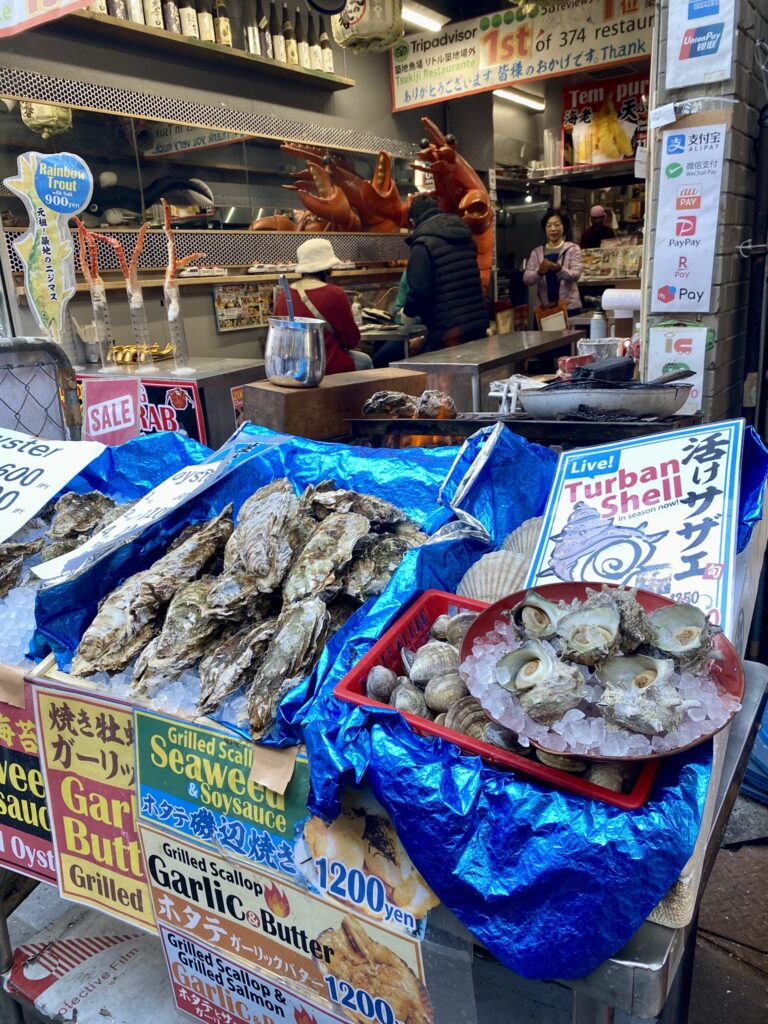
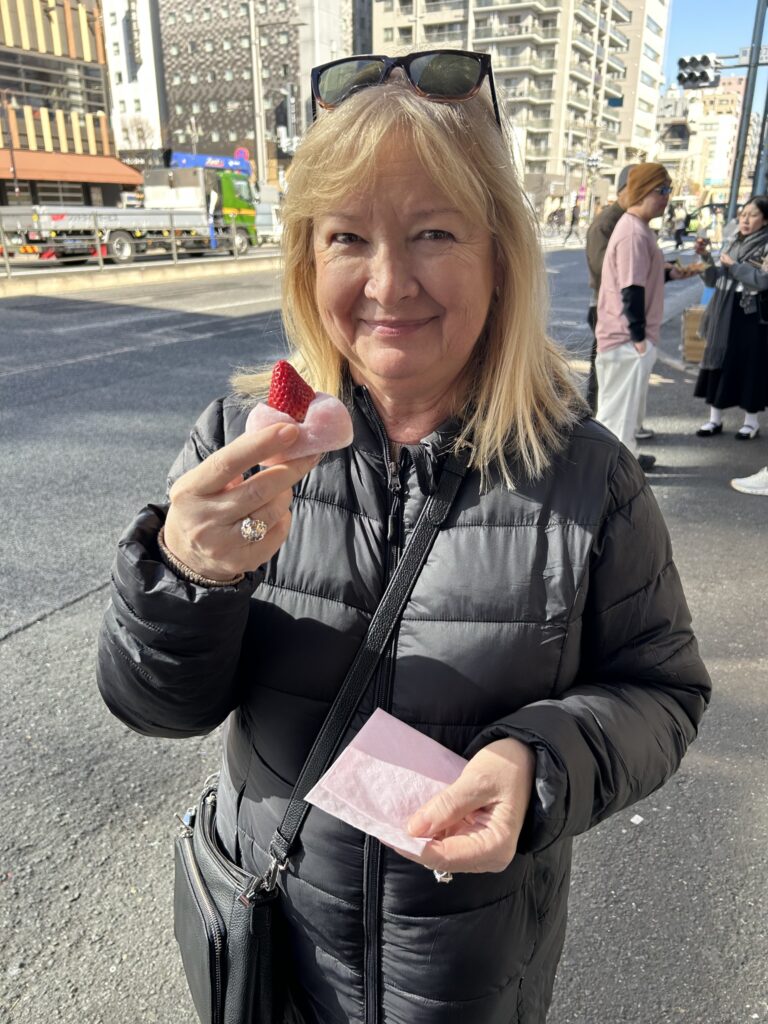
Somehow, we manage not to get lost and end up at Tsukiji Fish Market. No fish is sold here anymore (the original fish market has been moved elsewhere), but stalls of enticing food await: the largest oysters I have ever seen, crab legs, sushi plates, and tamagoyaki—the famous rolled omelet—and yes, the ever-enticing mochi, a traditional rice cake topped with a giant strawberry and whipped cream. This is truly a gourmet delight in every shape and form.
BASEMENT ENCOUNTERS
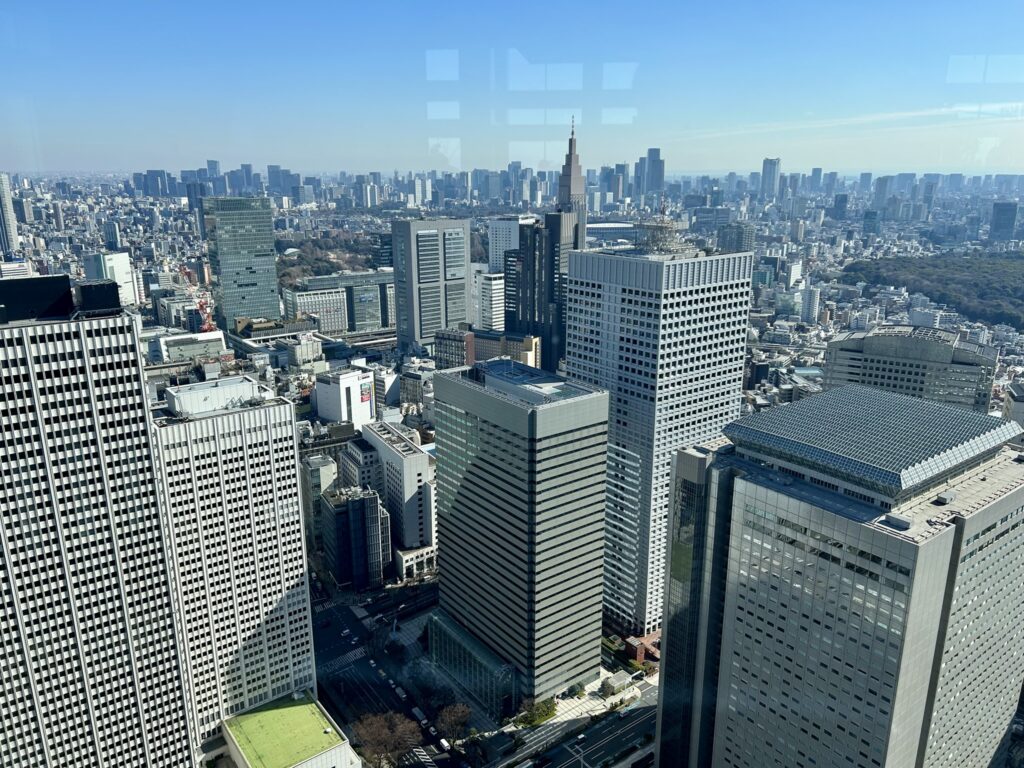
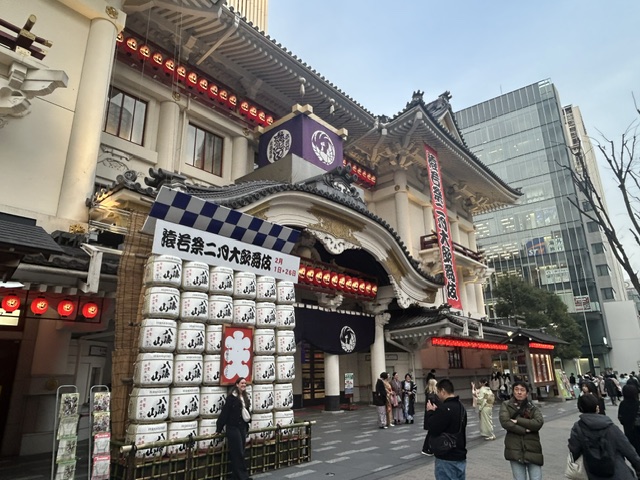
After a day spent exploring Tokyo—a fascinating blend of modern skyscrapers and centuries-old temples tucked between them—we head out for dinner. In Tokyo, some of the city’s best dining isn’t found at street level but hidden in the basements of office towers packed with dozens of restaurants, each with its own specialty.
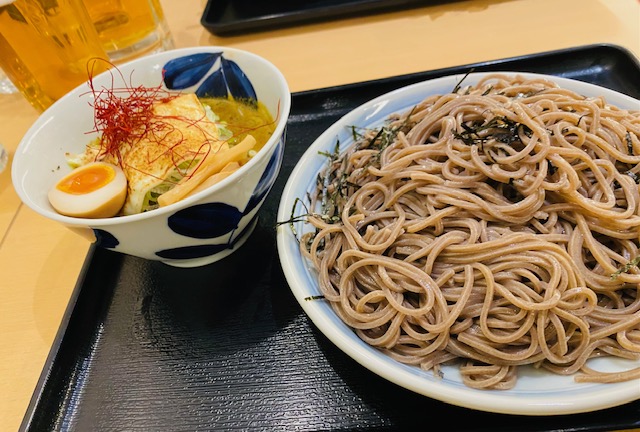
Armed with the name of a traditional soba restaurant, I set out determined to find it. Inside, the bar and booths are filled mostly with solitary businessmen enjoying a quiet meal after work, many glancing our way with polite curiosity.
Soon our soba arrives: a bowl of perfectly chilled buckwheat noodles accompanied by a steaming, intensely flavorful dipping broth. We gather a small bundle of noodles with our chopsticks, dip them into the hot broth, and savor the contrast of temperatures and textures. From the opening of the kitchen, the chef watches us with a knowing smile, clearly pleased by our delight.
EARLY CHERRY AND PLUM BLOSSOMS
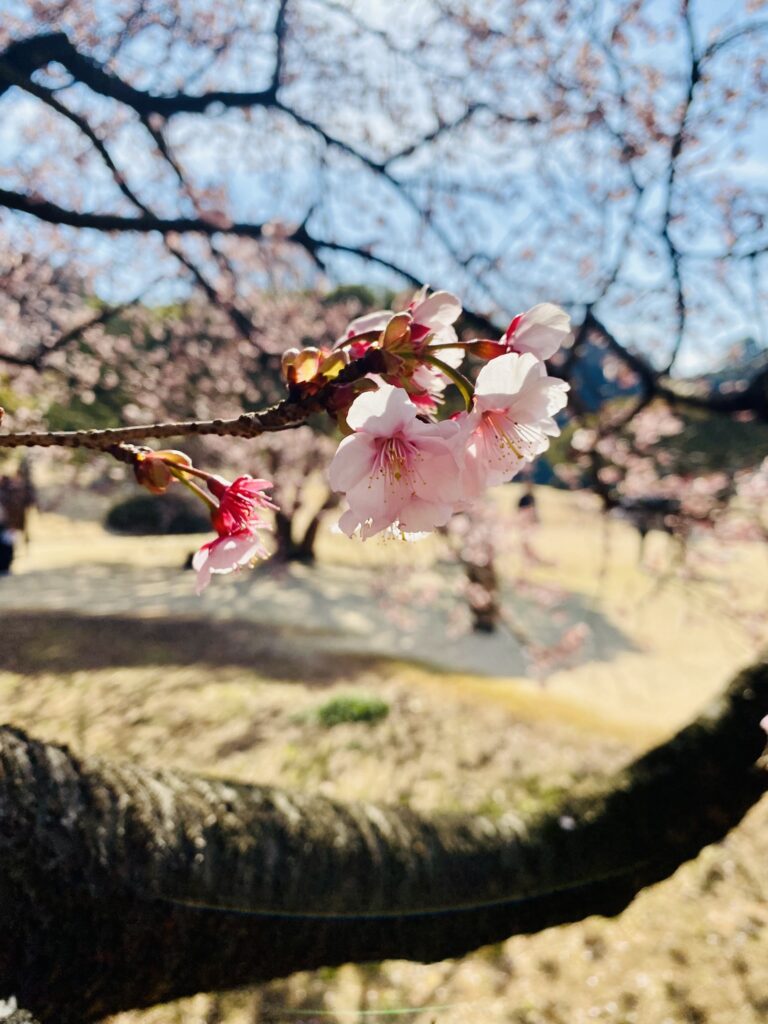
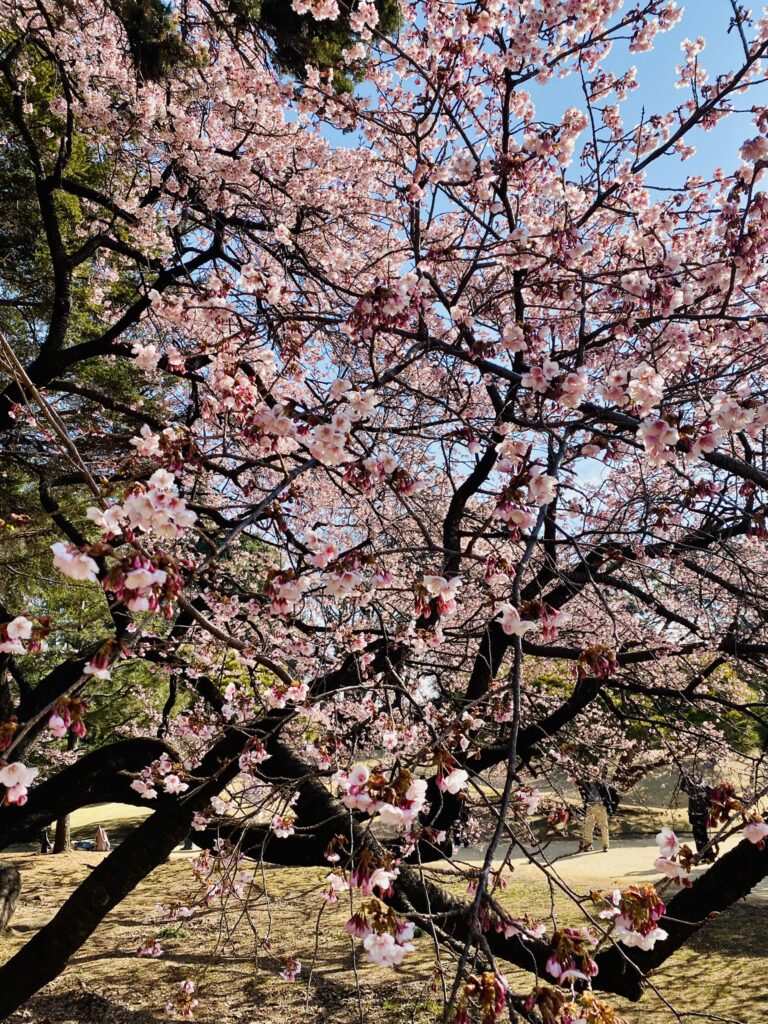
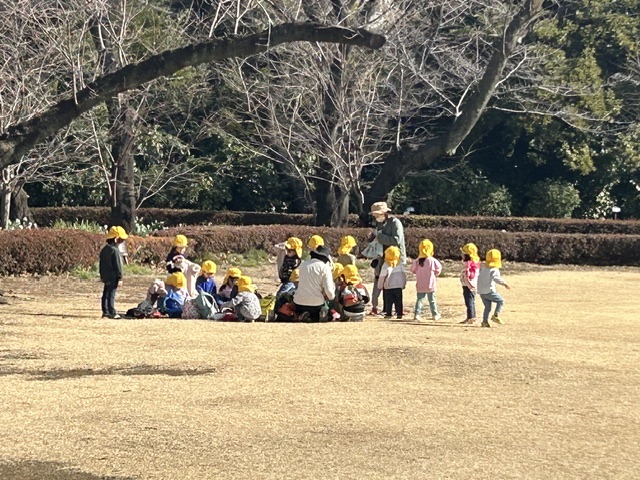
In the morning, we head out to Shinjuku Gyoen National Garden. Although it’s early February, there’s a rumor that the plum and cherry trees are blooming early. We are not disappointed—a pink garden of tiny blossoms dresses the trees in all their glory. We spend time taking photos of the buds and the traditional shrines in the park. A group of small children, all wearing neon yellow hats, plays in the park on a school outing.
LINE UP FOR A TREAT
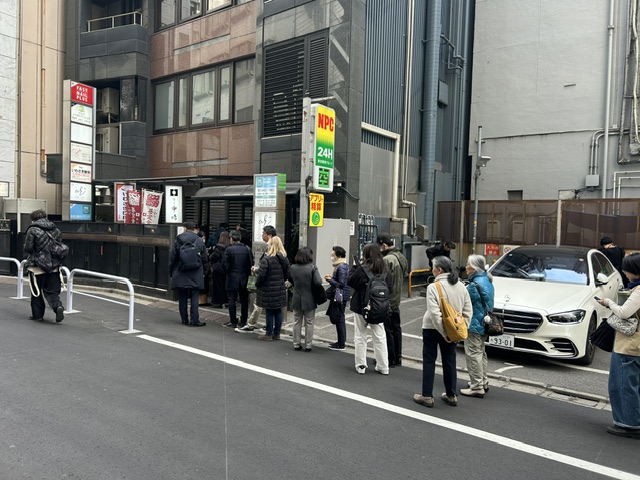
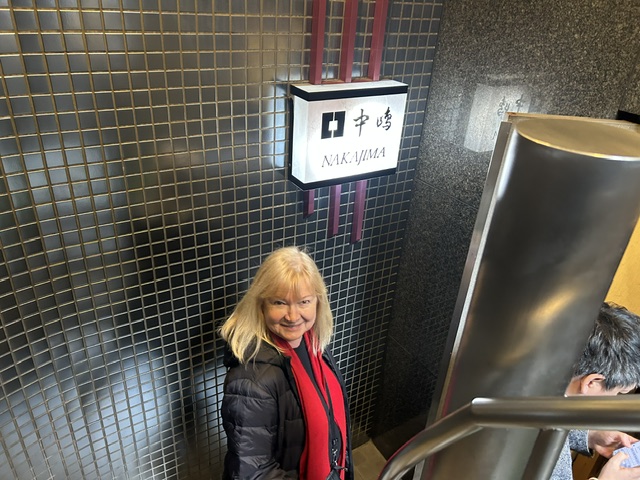
However, we have to leave for our lunch spot. Not far from the park is a Michelin-recognized restaurant, Kappo Nakajima, famous for its lunch sets and seasonal seafood dishes. No reservations are accepted, and a line has already formed outside the entrance to the basement restaurant. Once again, we notice we are the only non-locals—a good sign that this is not a tourist trap.
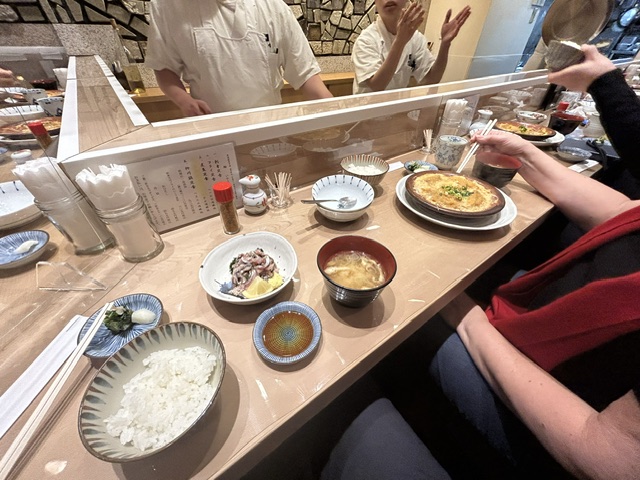
We wait in silence until the doors open at noon. The Japanese are orderly, quiet, and serious when standing in line for anything. We are seated at the bar and given a menu in Japanese with only two choices. I point to number one, hoping it won’t all be raw.
I am served a delicious casserole along with rice, vegetables, and of course soup and green tea. As we line up to pay using a small tray handed to us, we realize we have just had a Michelin-worthy meal for the equivalent of 18 dollars—for both of us. This makes me believe in Michelin ratings for a while.
DON QUIJOTE LAND
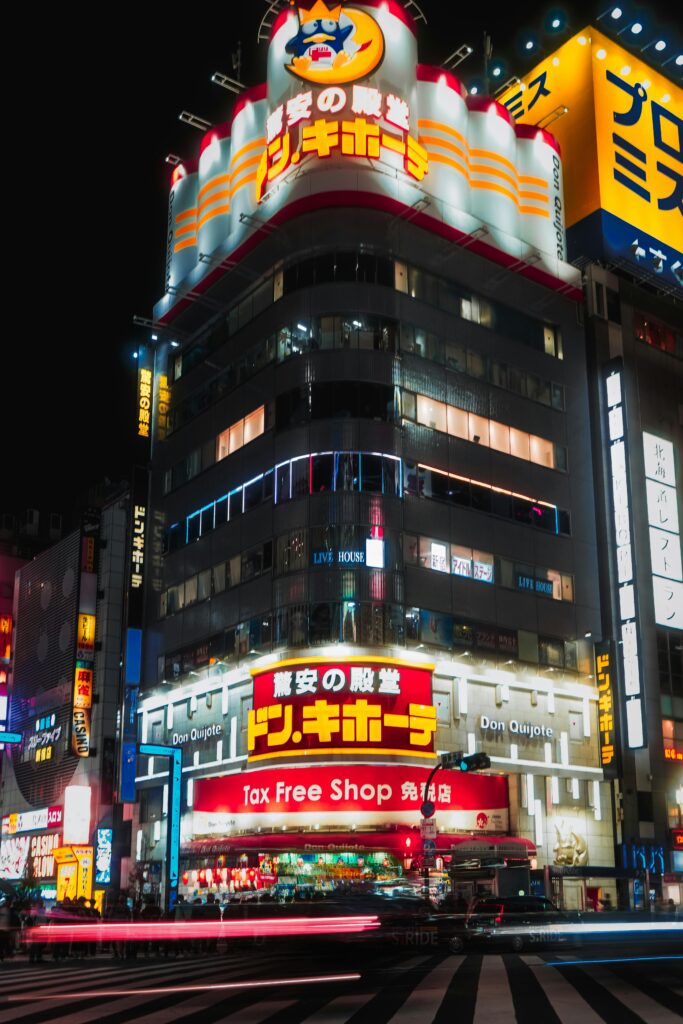
As Eric has work to do, I walk back to Shinjuku and visit the shopping area. I am not much of a shopper (how can I be when we always travel with only carry-on luggage?), but I love to look around and observe others who are frenetically buying everything in sight, as if this were their last chance to buy a souvenir.
I find—and dare to enter—the famous shopping temple: Don Quijote (commonly called Donki), where you hear the same jingle over and over again (“Donki Don, Don Don Quijote…”). The song is designed to create a sense of chaos and the feeling of being on a treasure hunt.
Seven floors are filled to the brim with thousands upon thousands of items. The first floor is a mix of goods meant to entice you to go higher. Then there are floors for candy—especially matcha-flavored KitKats—cosmetics, souvenirs, luxury bags, and more. You keep climbing stairs and are led through a labyrinth of… stuff.
Each aisle has small screens demonstrating products, each accompanied by a different jingle, but you cannot spend an hour here without getting that main song stuck in your head for the rest of the day. Sensory overload complete, I leave empty-handed.
“Donki Don, Don Don Quijote,” still playing in my head.
THE CROSSING
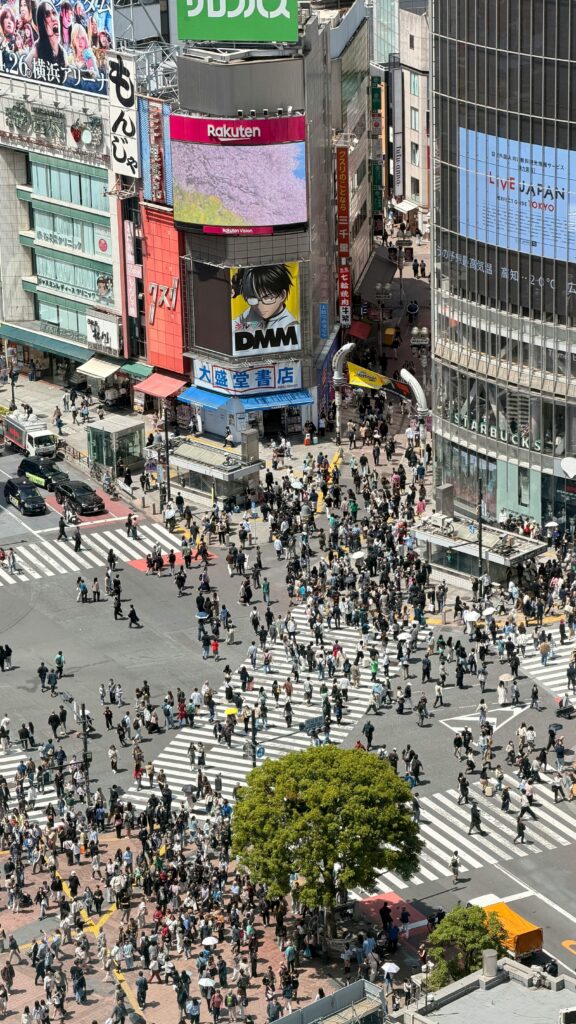
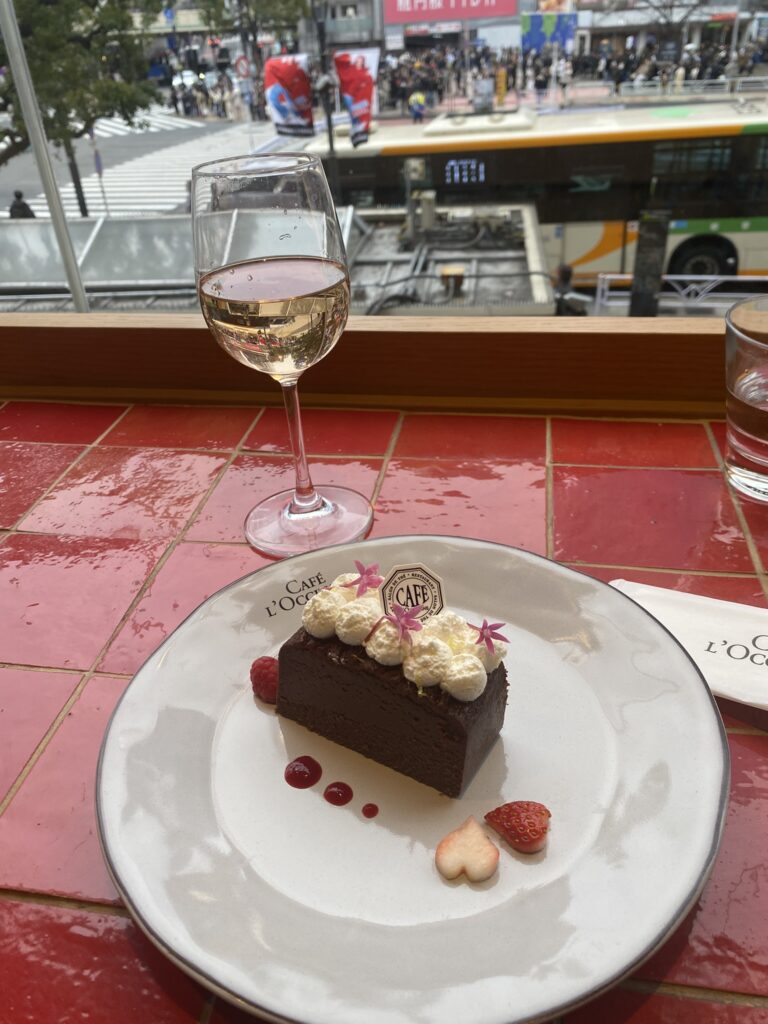
I head to Shibuya to see the famous crossing. I had already seen it at night during my first trip to Japan, so I choose to watch it during the day from a quiet café with a front-row window view, enjoying a perfect French pastry and a glass of rosé from Provence. After all, this is a much-needed break for me.
I watch hundreds of people wait for the signal to change and then cross at the same time. Some kids do acrobatics as they cross, most people are walking while filming themselves, and some even cross twice—but somehow it all works in perfect unity.
Shibuya is large and noisy, shifting from very upscale shopping streets to slightly seedy areas where hotels charge by the hour. I decide to head back to the hotel. This evening, I will take it easy and try a convenience store meal.
KONBINI MEAL
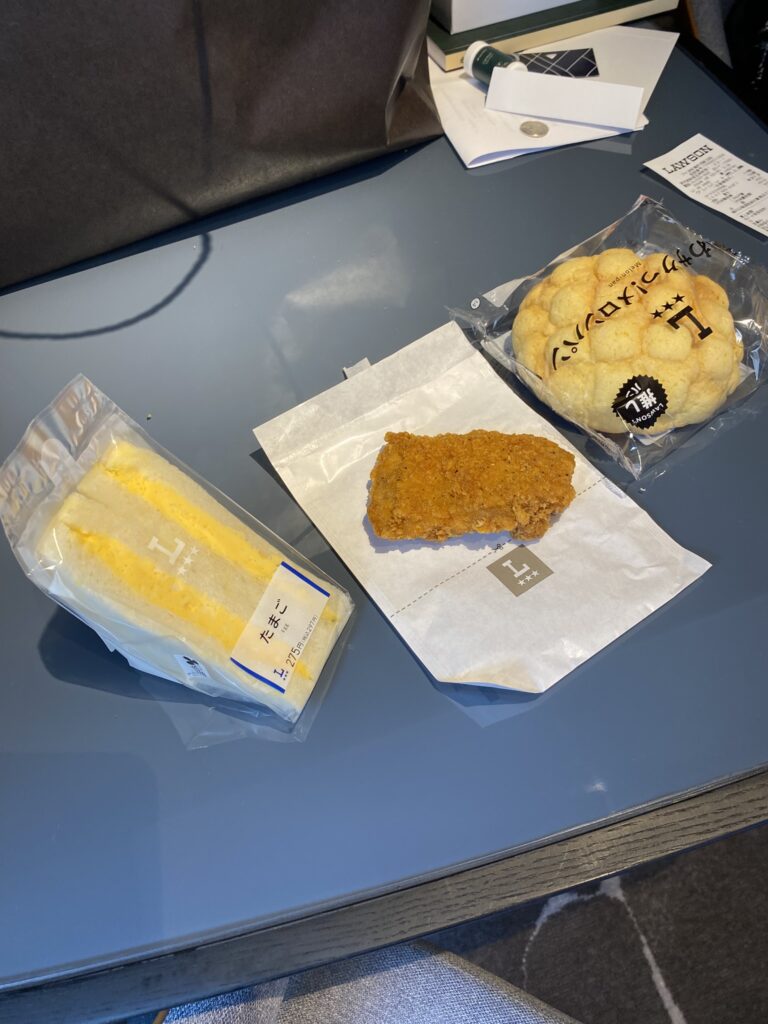
Tonight, I forgo all restaurant choices and take the convenient route. Convenience stores in Japan (konbini) are not what you expect. There are no gas stations attached to them, and the food is genuinely good—often considered gourmet. There are three major chains, each found on just about every block, each with its own jingle when you open the door, of course.
Food is restocked several times a day because so many people rely on them for their meals. Everything is always fresh and, if needed, heated on the spot for you. Anthony Bourdain once called Japanese convenience store egg salad sandwiches “pillows of love,” and believe me, they are. He particularly liked the ones at Lawson. These are some of the specialties of each store:
7-Eleven
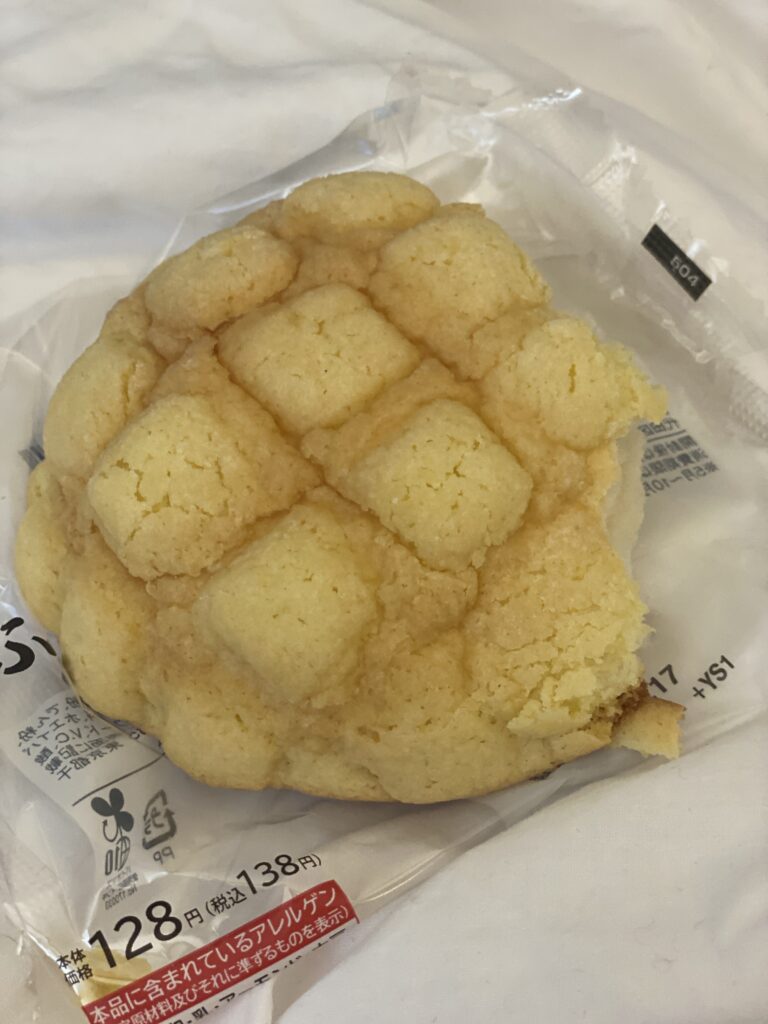
Seaweed-wrapped onigiri rice balls with tuna (a crowd favorite), and melon pan—a soft brioche shaped like a melon with a crispy, meringue-like crust on top. I still dream of it.
Lawson
Tamago sando, the famous egg salad sandwiches; Uchi Café Premium Roll Cake—light and creamy, as fresh as a bakery cream puff—as well as the crème brûlée ice cream.
FamilyMart
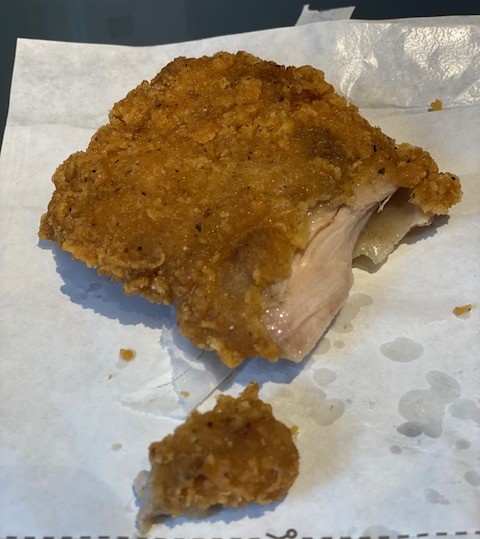
FamiChiki—legendary fried chicken cutlet: fresh, hot, and so delicious.
I can’t say enough about the convenience stores here. It’s a part of Japan that can’t be duplicated anywhere else.
THE SNOWSTORM
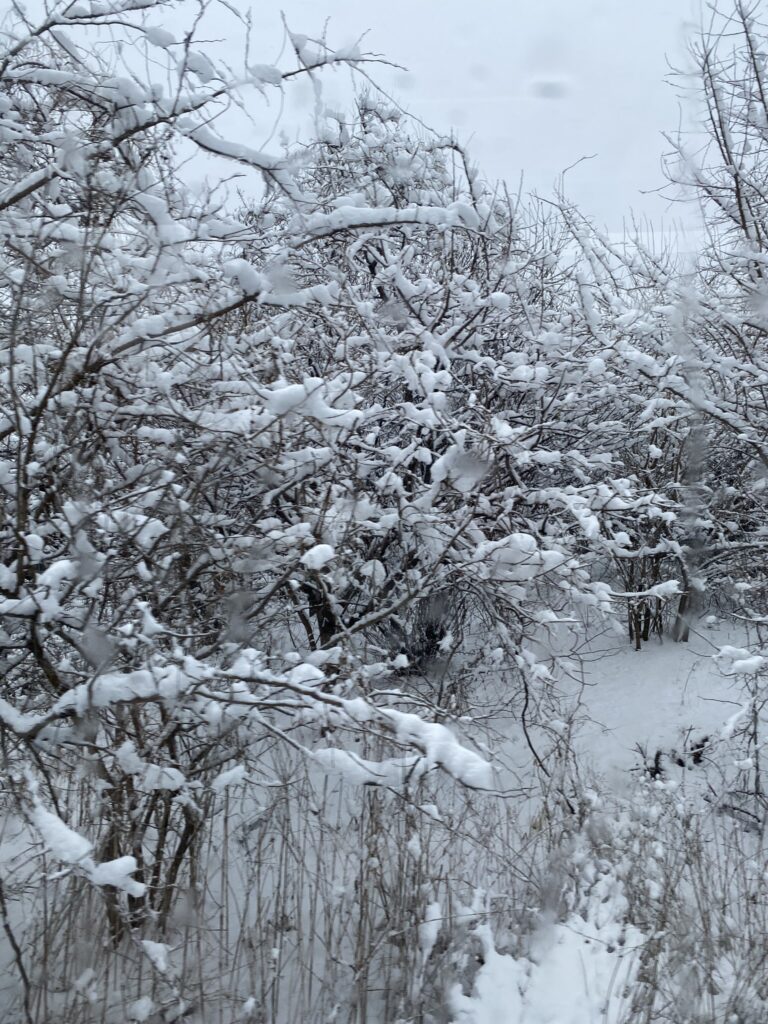
Today is departure day from Tokyo, and a surprise awaits: a snowstorm. The ground is white and fluffy, and we are set to take a bus to Lake Kawaguchi to stay in a traditional ryokan and hopefully see Mount Fuji. Most people say it takes three trips to finally see it, as it is often hidden by low clouds. Fingers crossed.
Of course, the bus is canceled because of the snowstorm. After figuring out what is going on, we manage to run to the train station, and a couple of trains later, we make it.
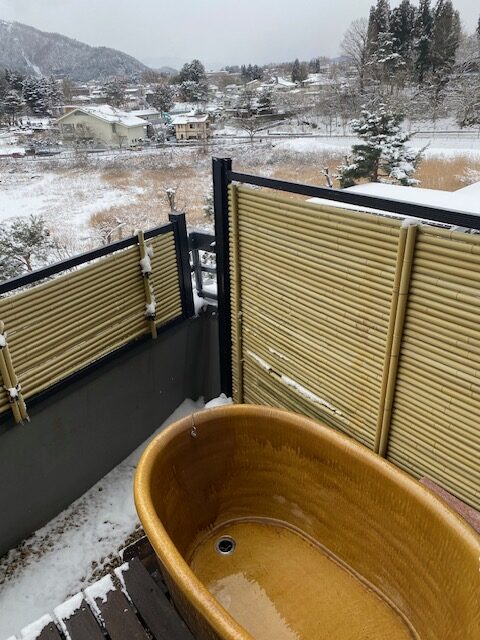
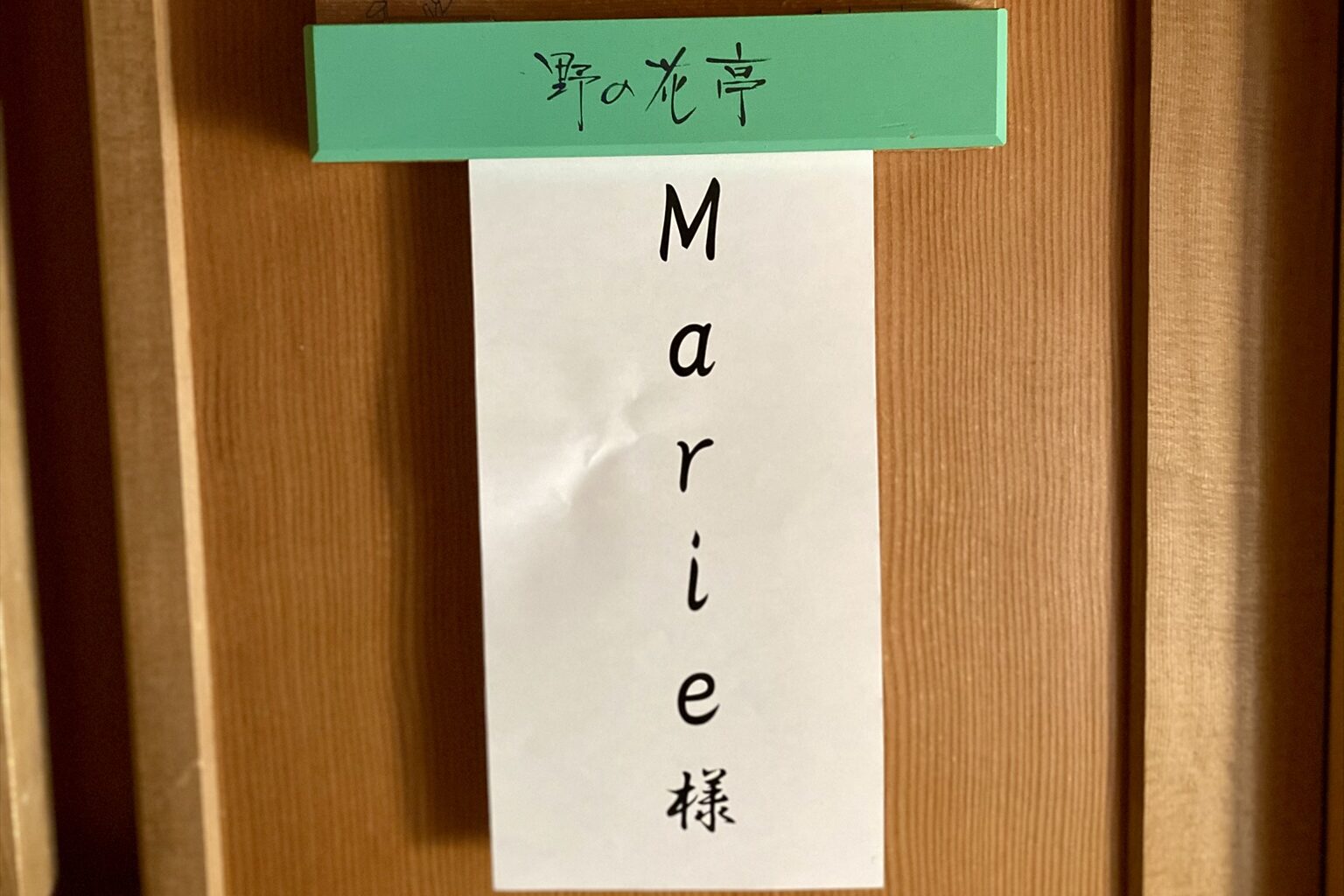
The Wakakusa no Yado Maruei ryokan is next to the lake and beautiful. Outside our room, my name is written in Japanese. Inside, it is very typical: a sitting area, and a room where you sleep on futon mats on the floor. On the top floor is a common onsen, or bath area, separated for men and women. However, we had our own private onsen just outside our room…. surrounded by snow.
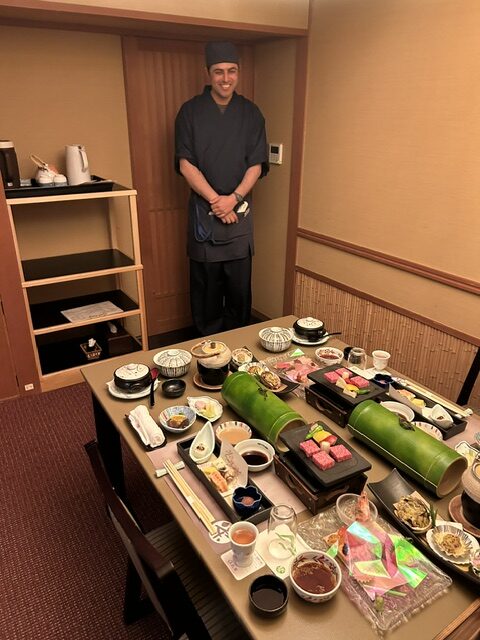
Dinner is an omakase chef’s-choice meal, enough to feed ten people. We are reminded several times to be on time and that no substitutions are allowed.
The attendant brings us to a private room, and the beautiful meal is spread out on the low table. Yes, there is sashimi, but to my husband’s dismay, as soon as the attendant leaves the room, I put my raw portion on the small grill in front of us. Spectacular—perfectly grilled fish. Maybe I invented a new dish.
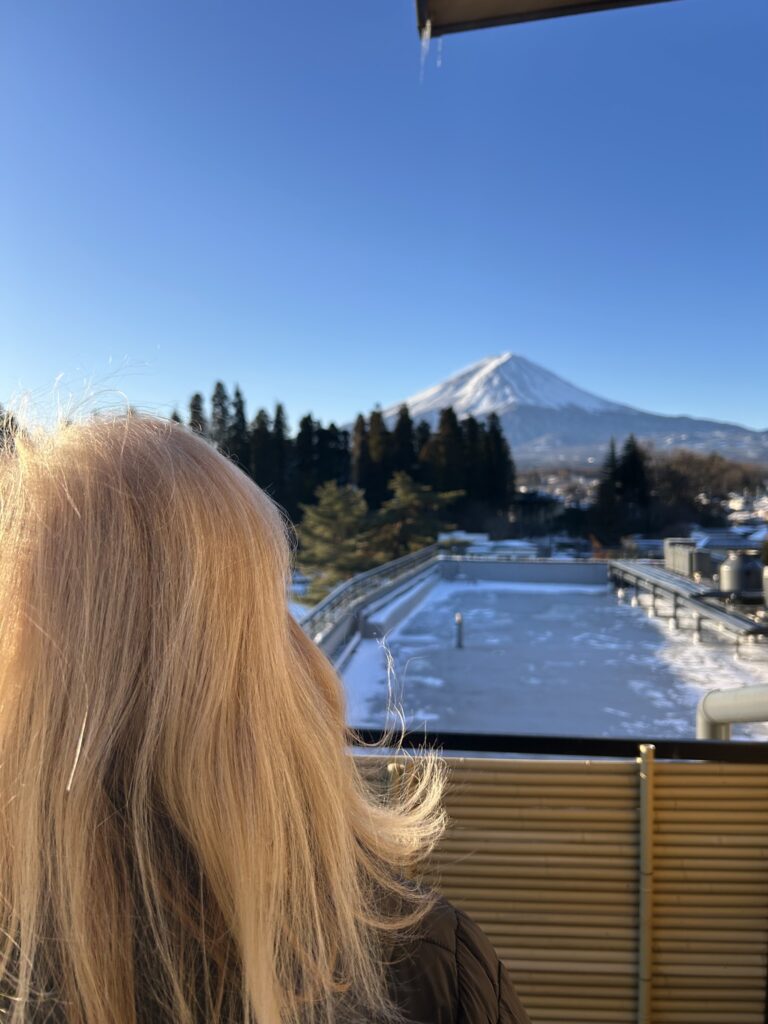
The next morning, we awoke to a clear, majestic view of Mount Fuji outside our window—a sight to humble anyone. No words were needed.
OSAKA BLING
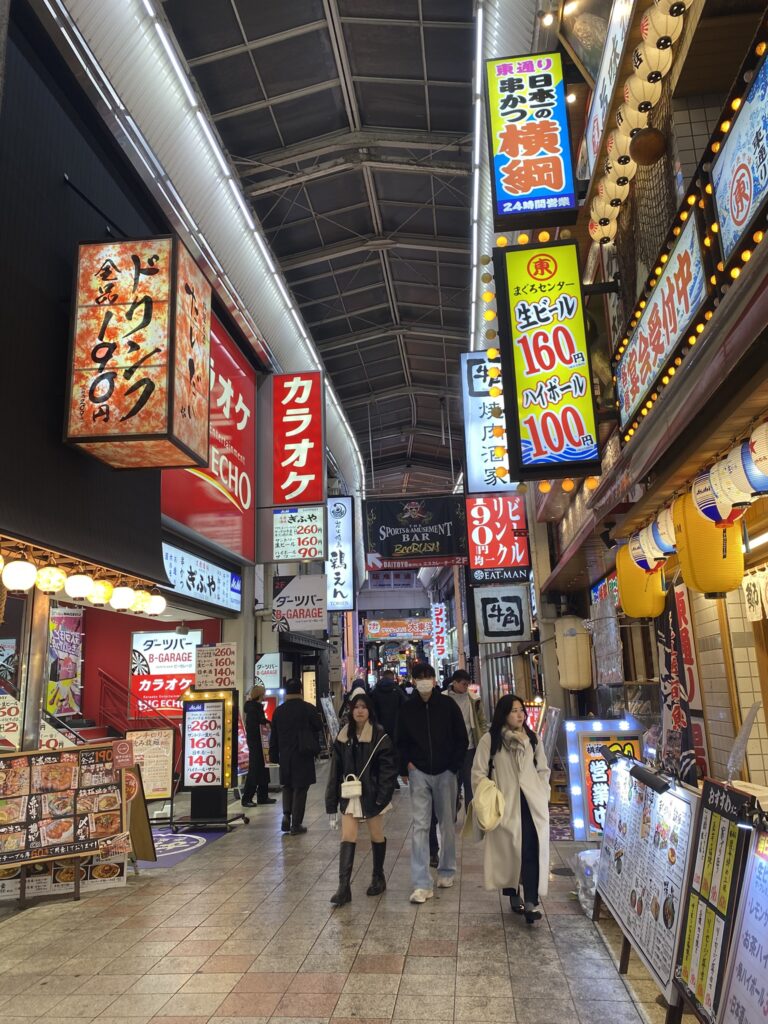
We are trapped in a giant pinball machine—colors, lights, music, and endless neon signs. But it’s as beautiful as it is noisy. We check into our elegant hotel, Villa Fontaine Grand Osaka Umeda, with all the amenities except closet space. I wonder how the average large-suitcase traveler manages here. Japan is notorious for its small hotel rooms, but this is the first without a closet—just hooks along the wall. However, the service and location are top-notch, so it works.
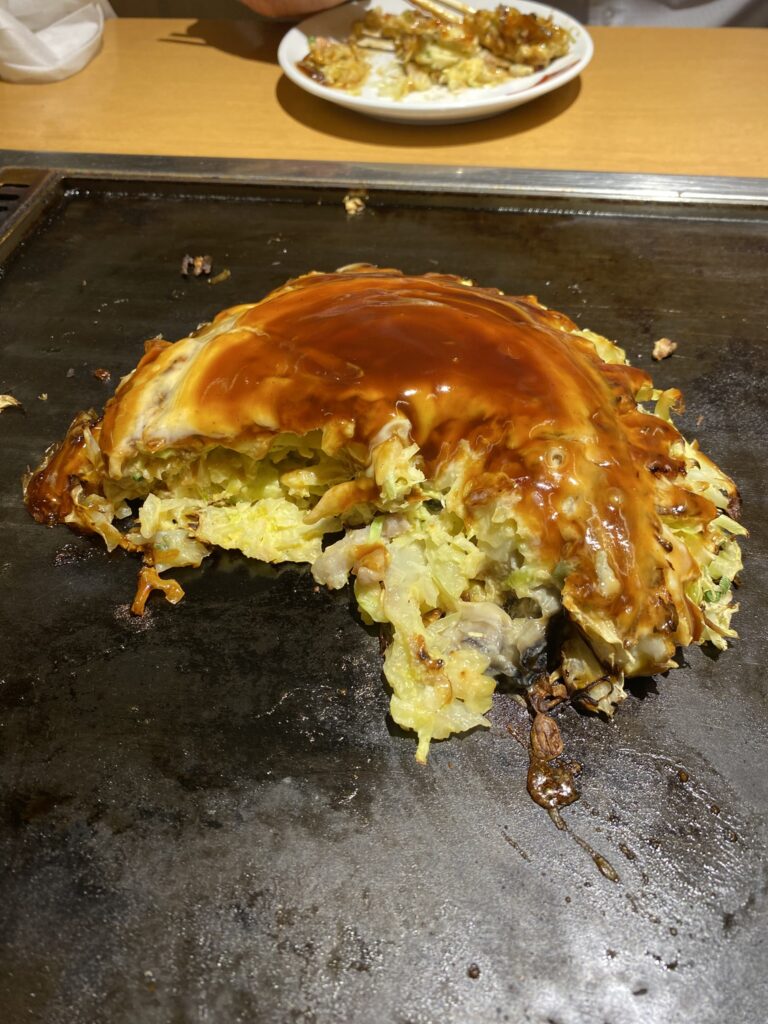
Osaka is where you find the soul food of Japan. We try the famous okonomiyaki, a savory cabbage pancake cooked on a griddle with pork, seafood, or both, and topped with rich sauce. We also eat street food: takoyaki, molten octopus-filled dough balls sold at street stalls, and kushikatsu, crispy fried skewers served with dipping sauce. It’s all wonderful.
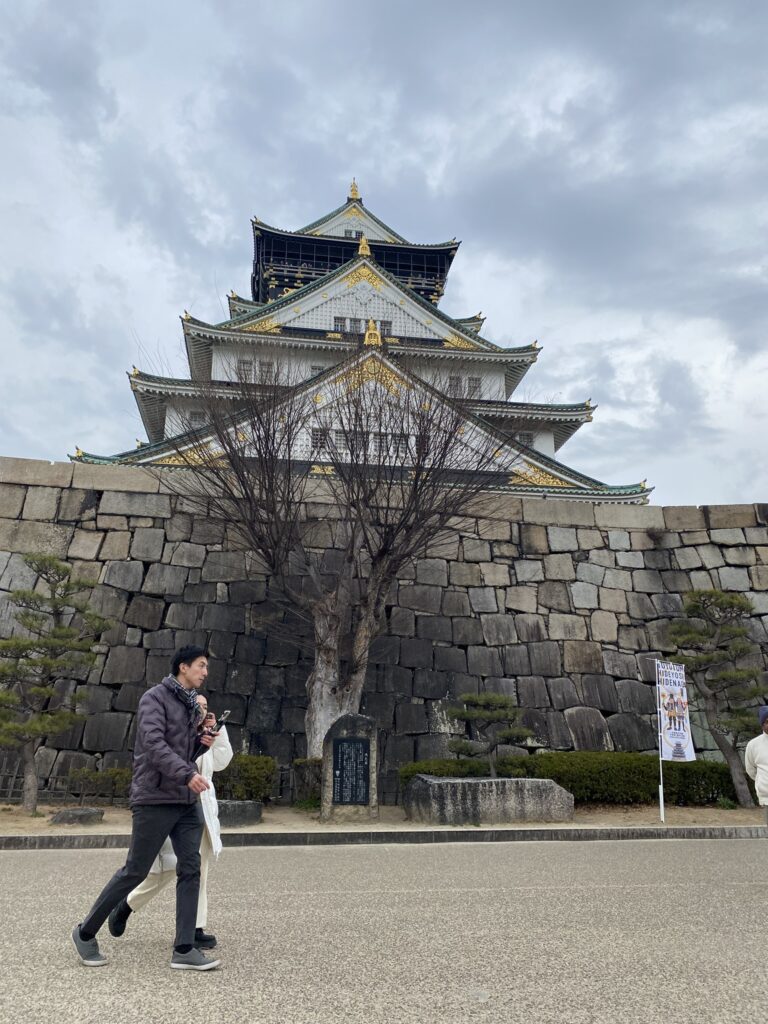
We visit Osaka Castle—royal and elegant—set within a large park where people come to escape the city center and find quiet places to think. We listen to local music playing in the park.
THE FUGU TIME
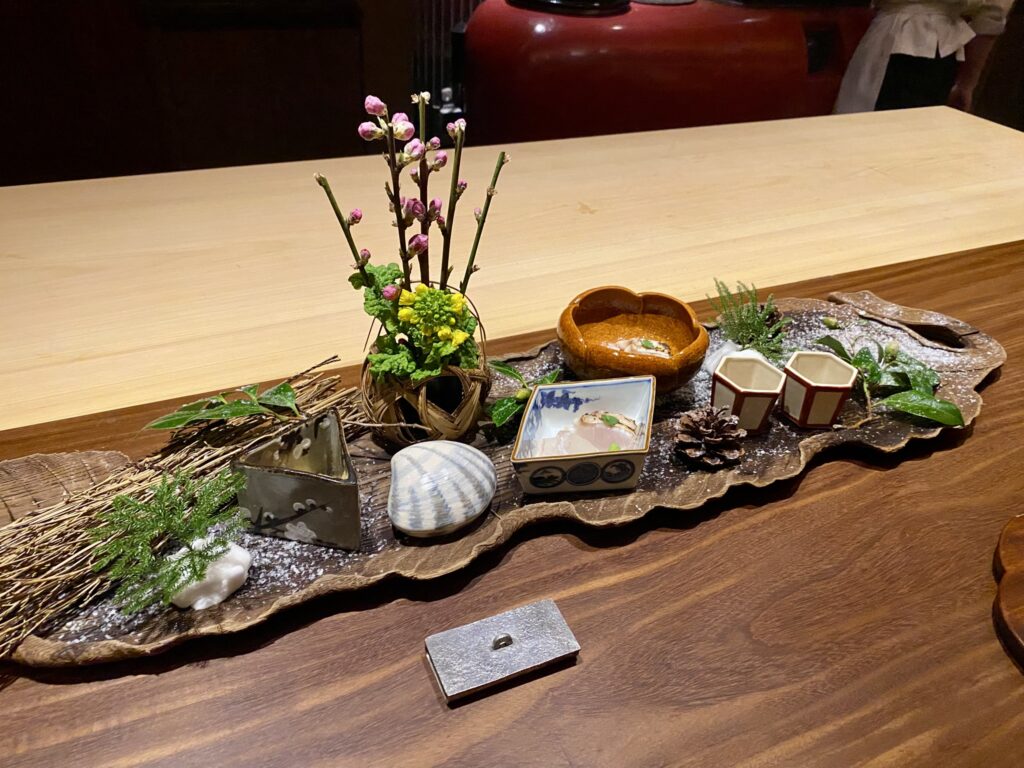
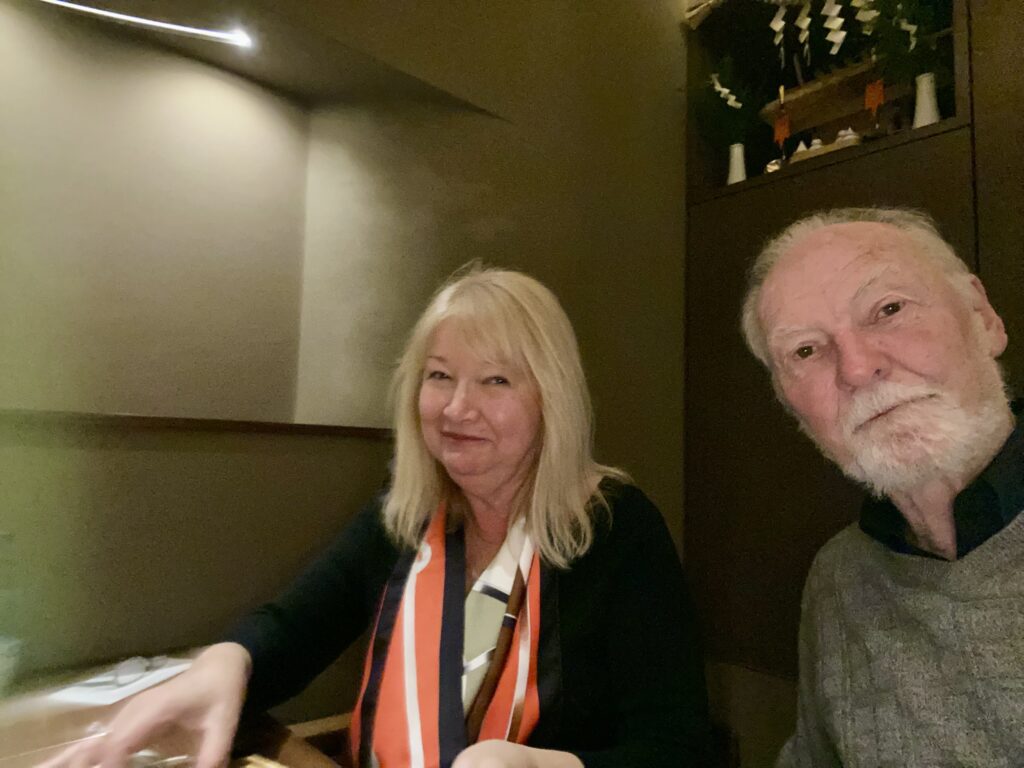
Tonight is the treat I have been waiting for. I managed to secure a reservation weeks ago at a two-Michelin-star restaurant. Nestled on a small street with no sign out front, it is a prepaid, chef’s-choice tasting menu. We enter the elegant room and are seated at the counter; only twelve guests are here for this culinary experience, all facing the chef. I can already feel this is going to be something special. Obviously, I had not done enough research.
No one speaks English. We are assigned a young assistant who helps the chef and uses his iPhone as a translator. The chef bows, smiles, and begins. There will be twelve courses.
We start with sashimi, of course. The presentation is a work of art. My husband is loving this, and I make an effort to try it. It’s not bad and comes with dipping sauces. Maybe raw fish won’t be so hard to handle after all.
Osaka, especially the Dotonbori area in winter, is known for its most coveted specialty: fugu, or pufferfish. The fish contains a deadly toxin called tetrodotoxin, and it can only legally be prepared in Japan by specially licensed chefs. The liver and certain organs are especially dangerous. And yes—lucky me—that is what we are served. In ultra-thin slices. Raw.
I eat it. My husband eats it. The rest of the group seems lost in joy and ecstasy that this is on the menu tonight. I don’t see any fugu cutting certificates on the wall. I trust that the chef passed his course with flying colors. It’s not particularly fishy or flavorful, so I am relieved. How bad can it be now?
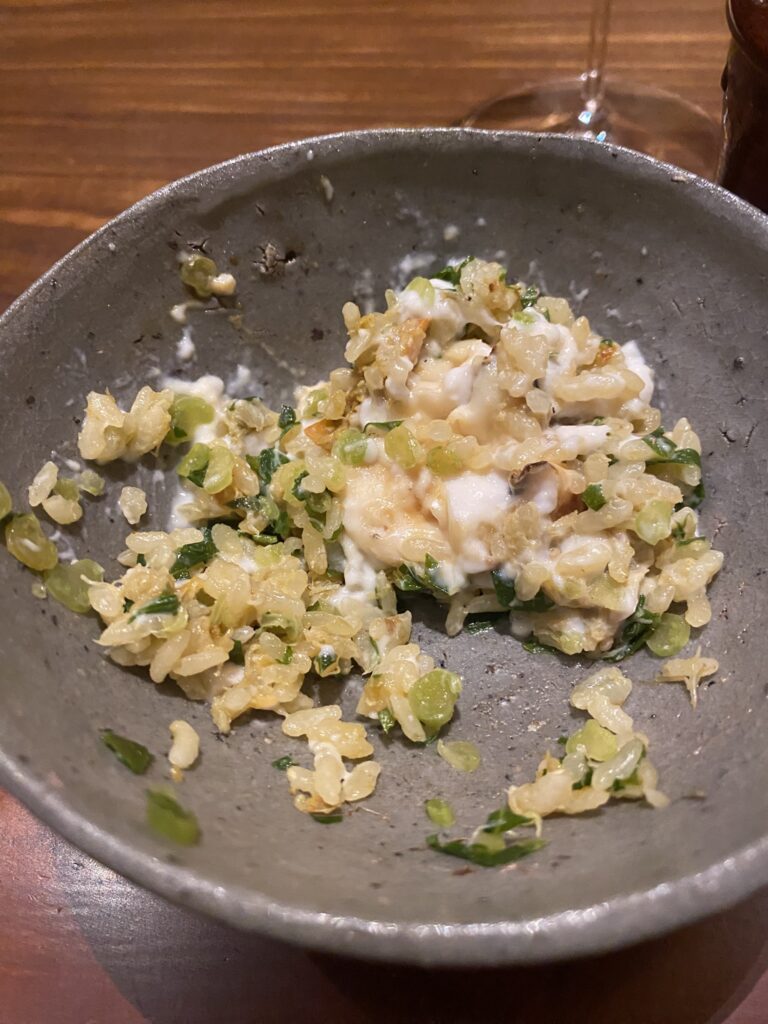
The next dish arrives: a white gelatinous portion of fish with rice and broth. The chef looks at us expectantly. I ask the assistant what it is. He searches on his phone and, with a big smile, says, “It’s fugu innards.” “Innards?” I say with a frozen smile. He looks again, typing further. “It’s fugu testicles.”
The blood drains from my face. My husband laughs, and I think: the fugu didn’t kill me, but this is really pushing the envelope. I do my best, eat most of the rice, and quietly bury the fugu pieces underneath the rest. I think the chef sees me, but at this point all I can think is: if I don’t die in the next 45 minutes, I’m good. That’s how long it takes for the toxin to take effect if it hits you.
The rest of the meal is actually spectacular. I feel a bit guilty thinking how many people would be jealous of such a banquet. It’s a great experience, and I have… survived it. Let me know if you want the address of the restaurant.
KYOTO
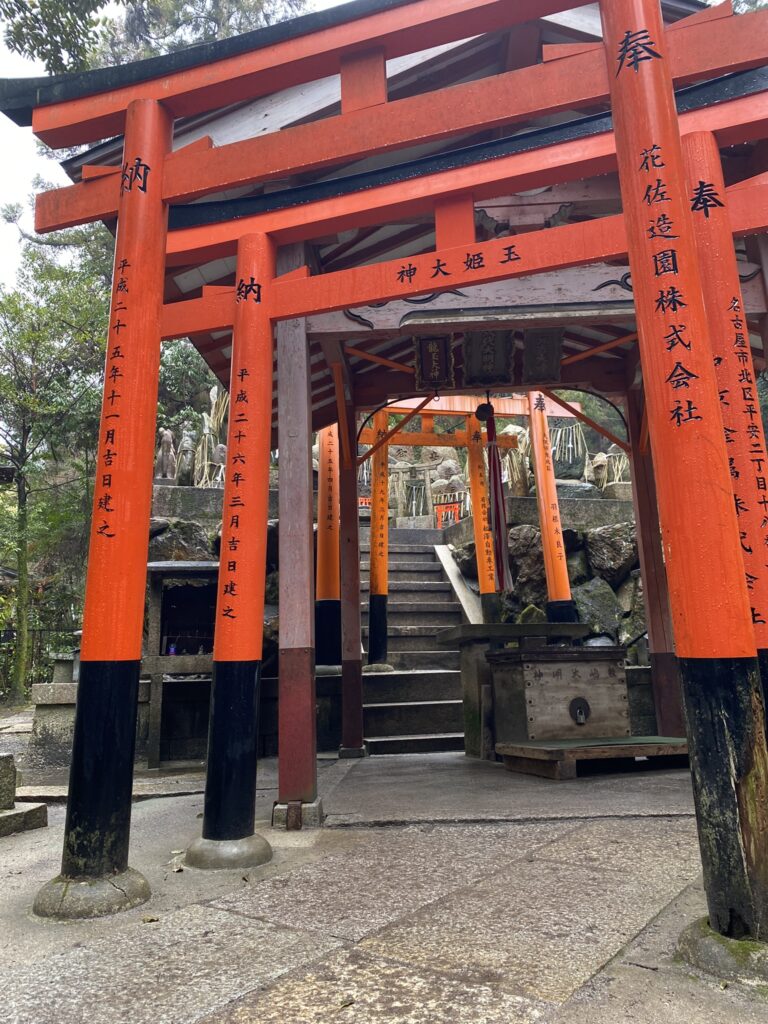
If you want more traditional Japanese sites, this is the place to be. We first take the train to Fushimi Inari Taisha Shrine, known for its thousands of bright red torii gates winding up a forested mountain trail. It is dedicated to Inari, the Shinto deity of rice, prosperity, and business. The site is immense, and the crowds are thick, but you can find pockets of forest and quieter trails that offer some respite.
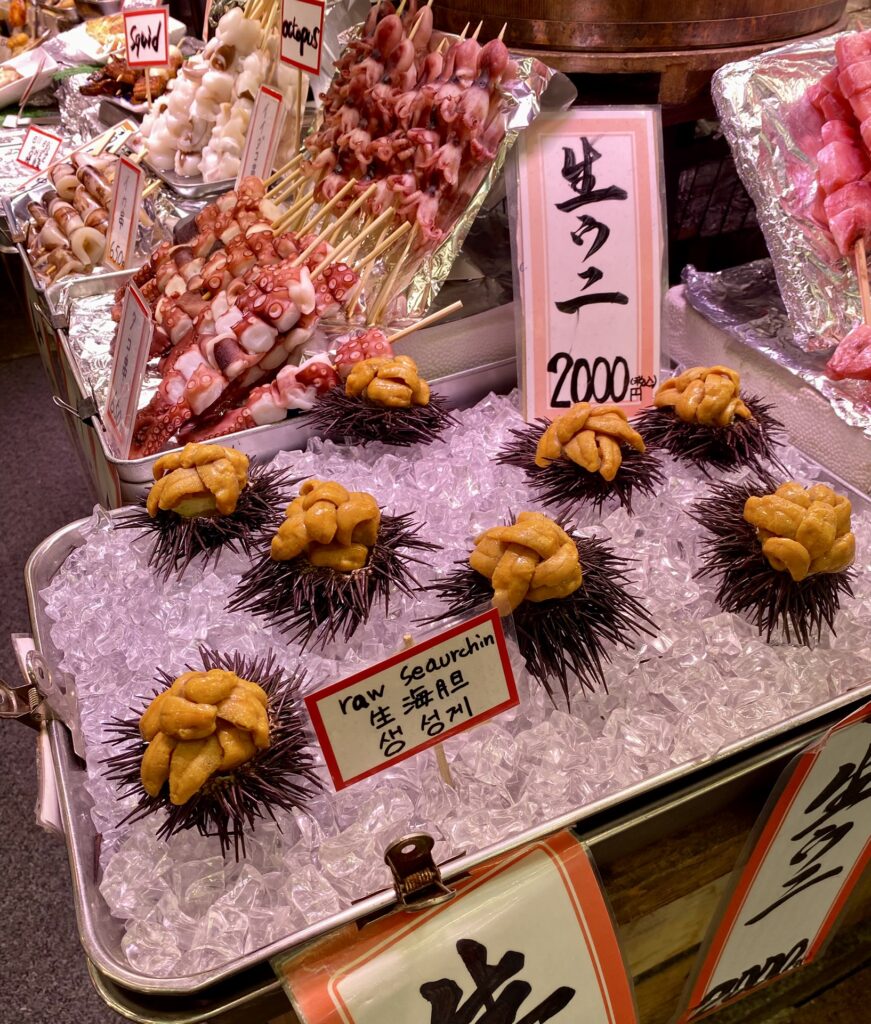
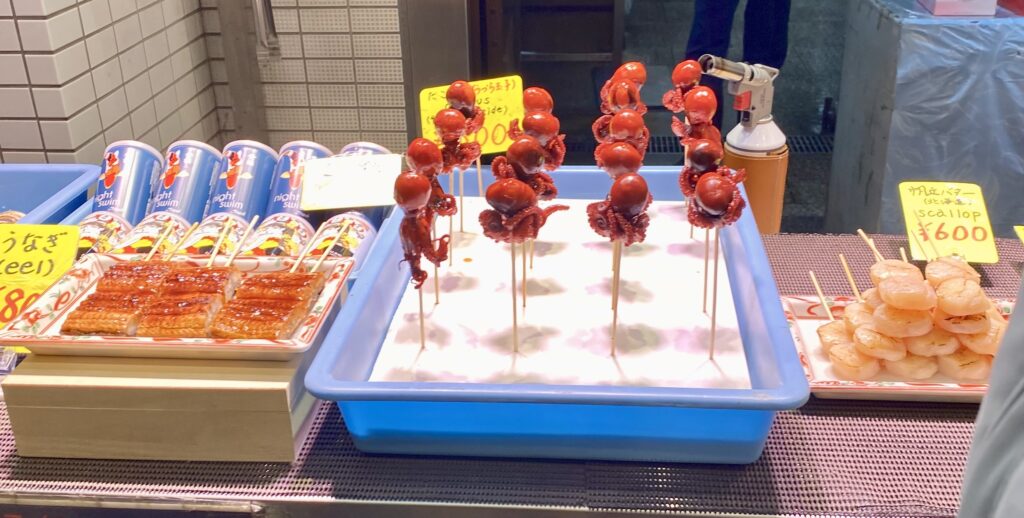
We then go to Kyoto, exploring the lovely Gion district, where you can occasionally see geishas. It is traditional, calm, and beautiful. Next is Nishiki Market—stall after stall of food and gifts. Countless stands display colorful seafood, octopus skewers, beautiful silk fans, and hair ornaments. And finally—a coffee shop! After countless matcha tea shops, it feels like a welcome surprise. I linger and enjoy the hot coffee taste.
DEER NARA
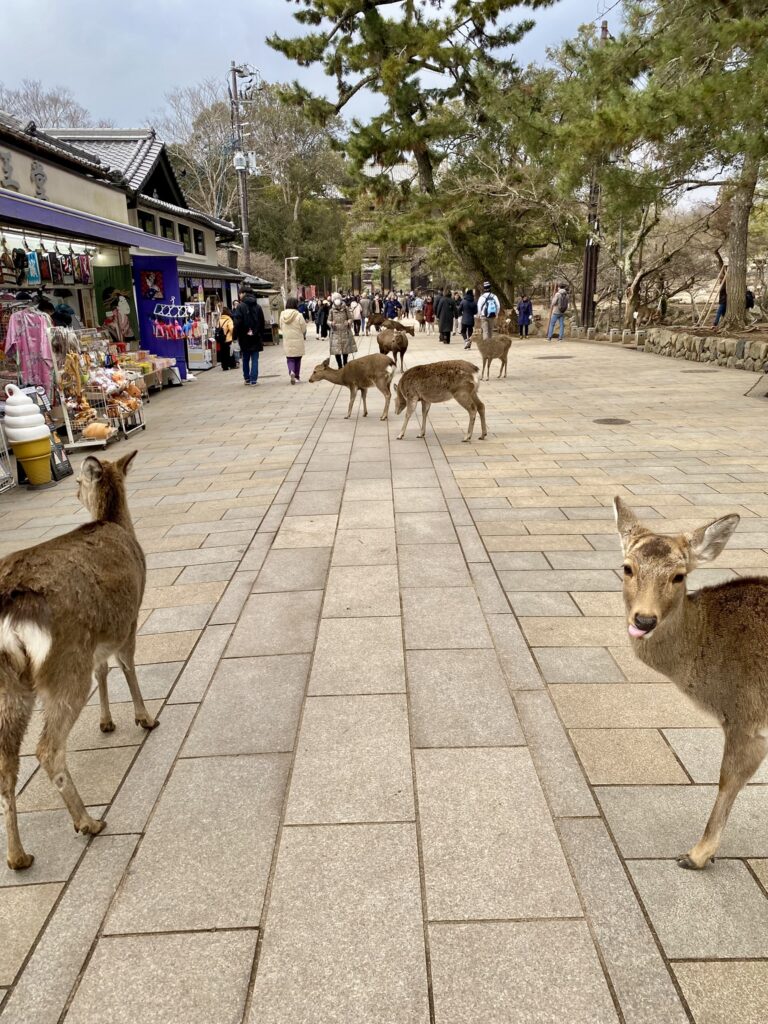
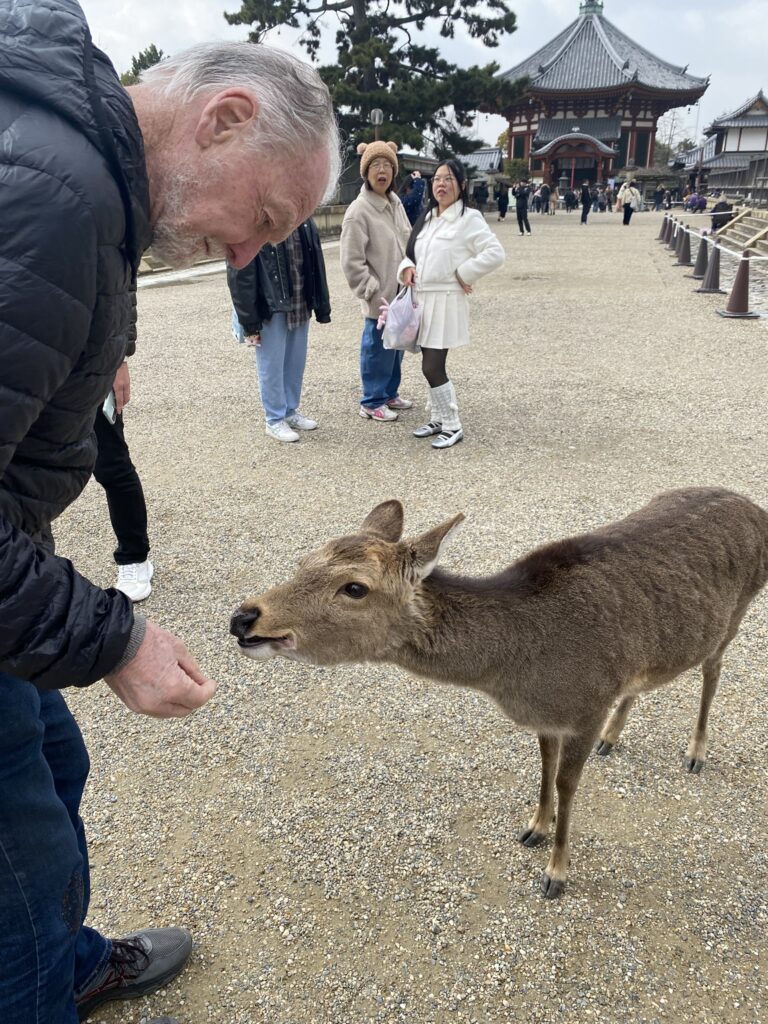
If you want to be in a large park surrounded by hundreds of deer who follow you and bow to get the coveted feeding crackers you just bought at the entrance, you are in luck. Nara Park is just you, nature, and hundreds of endearing creatures who can become surprisingly assertive, even biting at your coat pockets in search of a treat. Amazingly, they are so at ease that you quickly realize this is their park—and you are just a visitor.
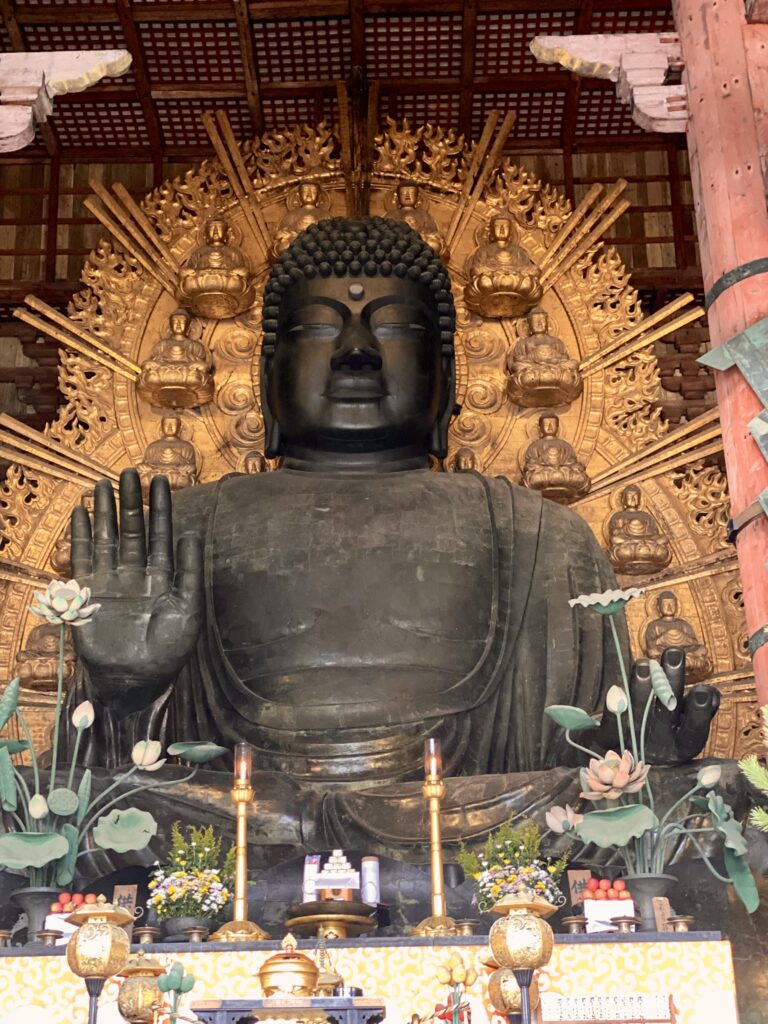
This is also where you can visit the vast Tōdai-ji Temple, a Buddhist temple complex renowned for its monumental wooden architecture and its Great Buddha statue (Daibutsu). Founded in the 8th century, it serves as the headquarters of the Kegon school of Buddhism and is considered one of Japan’s most historically and culturally significant religious sites.
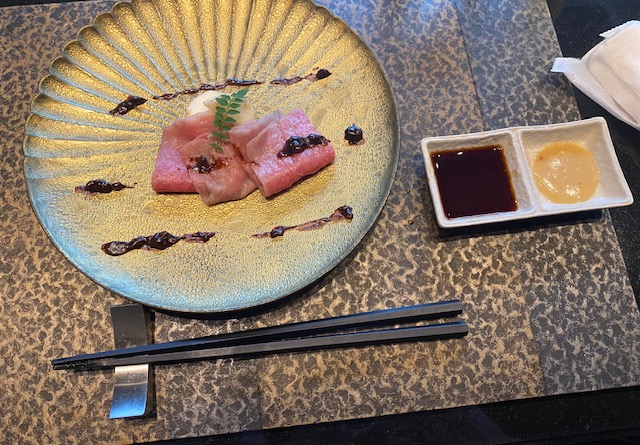
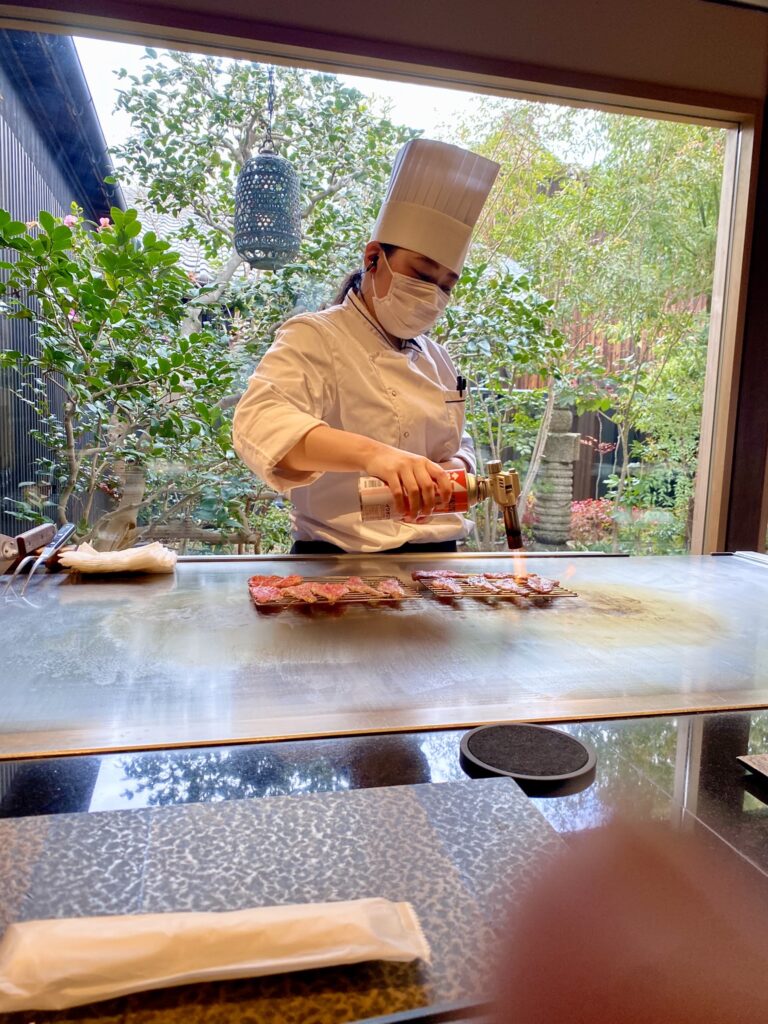
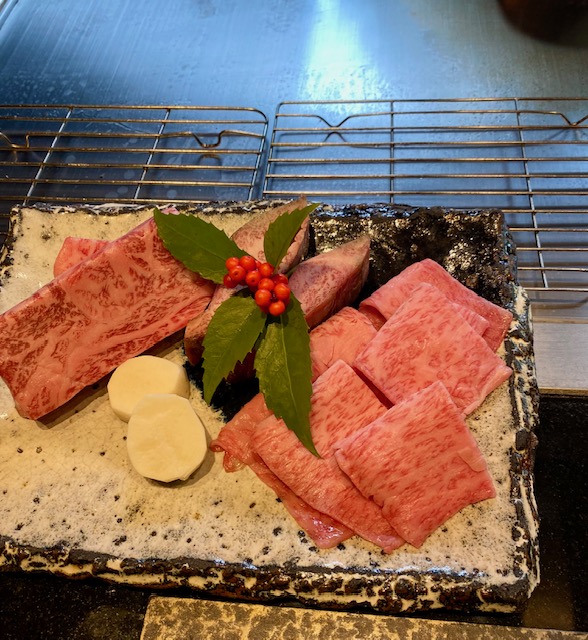
Lunch is approaching, and Eric wanders behind a bamboo gate and discovers a gem of a restaurant next to Nara Park. The setting is magnificent—a table overlooking a bonsai garden. This is Todaiji Temple Nagomi, again a chef’s-choice lunch, but this time it is all steak: the famous Kobe beef. It is winter, and the even more coveted Matsusaka beef is also on the menu.
The chef works his magic on the cooking surface, and the result is one of the best meals on the trip.
Back on the bullet train, we head to Tokyo for one last day before departure.
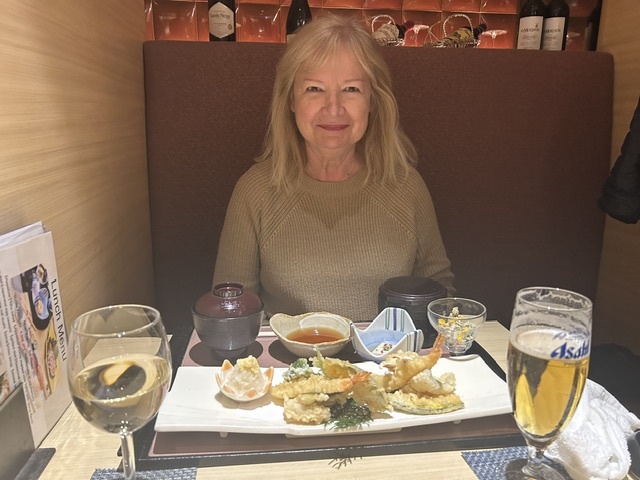
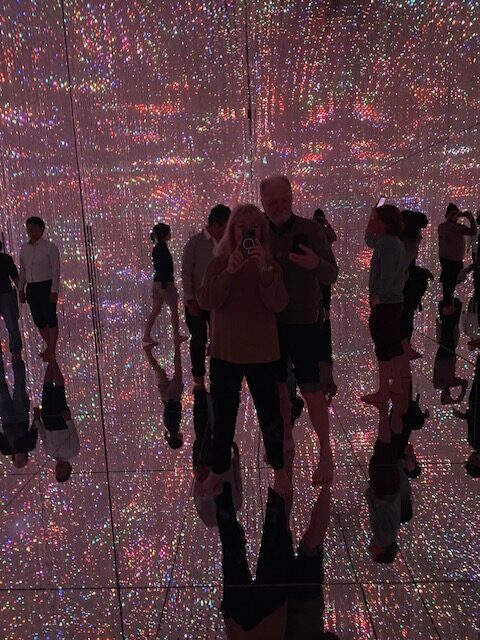
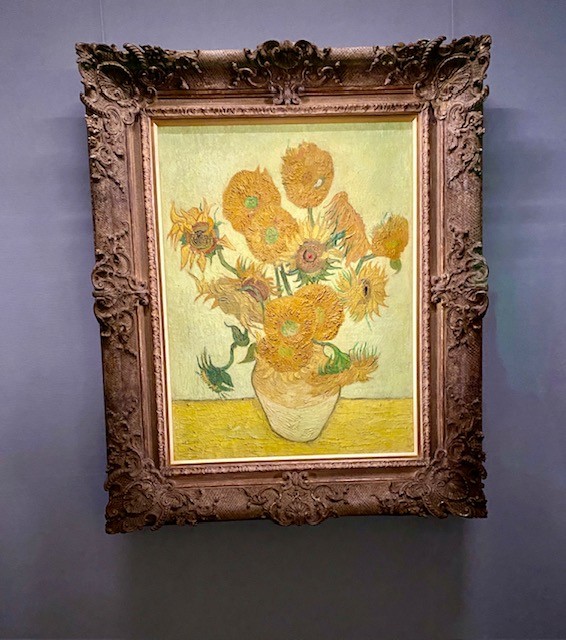
Twenty-four hours are crammed with everything we have not yet done. For lunch, we accidentally find an incredible tempura restaurant in Ginza (Ginza Ibuki), Tokyo’s high-end district. We also visit TeamLab, an interactive museum where you find yourself knee-deep in water, surrounded by millions of crystals. At the Sompo Museum of Art, we are lucky enough to see the Van Gogh exhibit and his Sunflowers.
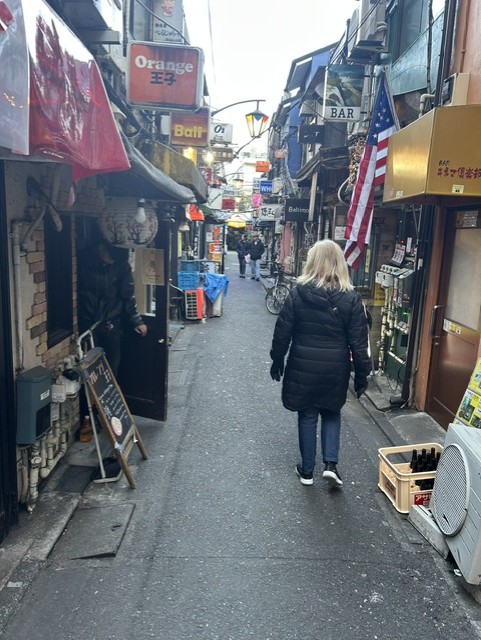
Later, we explore the Golden Gai area—a maze of tiny bars, one after another—where you can experience the nightlife of Shinjuku. We end the night at a random whisky bar, where the bartender seemed to have had more drinks than the customers, so much that we had to help him with the payment machine so he could charge his guests.
This was my second trip to Japan, and it confirmed what I already suspected after the first: it gets under your skin in the best possible way.
Japan is a playground for food and experiences—from basement soba and ramen bars, to Michelin lunches that cost less than takeout, bento boxes on the train, traditional ryokan feasts, convenience store delicacies, Kobe and Matsusaka beef, and even fugu that definitely made me question my life choices for a moment.
Tokyo is electric and endlessly fun, Osaka is the food capital, and Kyoto and Nara feel like another world entirely. And then there are all the small surprises in between: bowing instead of shaking hands, Onsen baths in the snow, fresh hotel-provided pajamas every night, the softest toothbrushes in the world, deer following you in parks, and temples hidden behind modern chaos.
It is intense, beautiful, sometimes overwhelming, and completely unforgettable.
And I can’t wait to go back and try to finally find EXIT NUMBER 8.
?
3 comments for “The many wonders of Japan: Neon lights, snow storms and skirting death by Fugu”