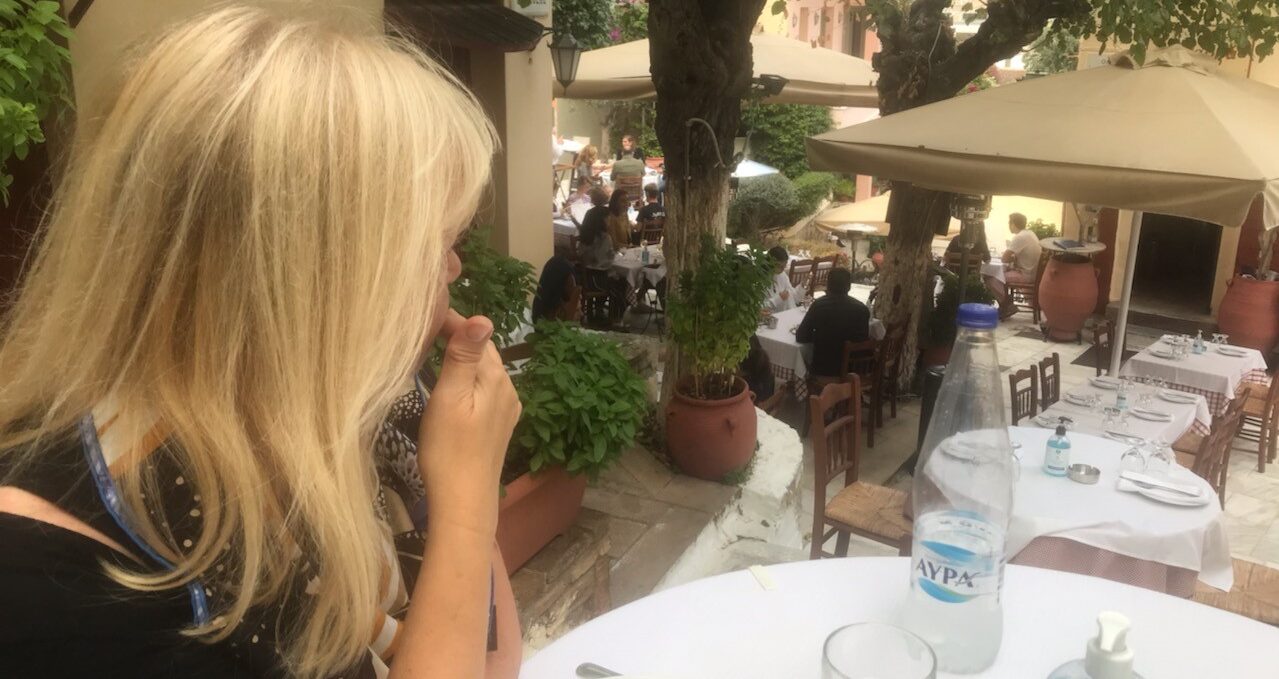
Recently, we took a two-week cruise around Southeast Asia. The cruise itself was spectacular and deserves a blog post of its own. This piece, however, isn’t about cruising—it’s a collection of snapshots from the cities we visited and the impressions we gathered along the way in this richly exotic region.
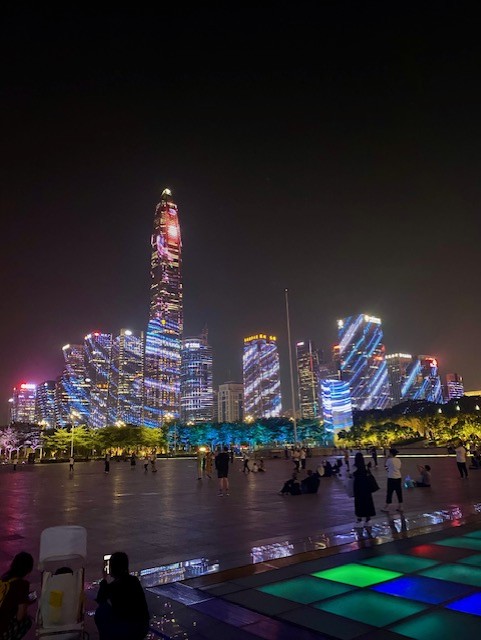
Shenzhen: The Future in Overdrive
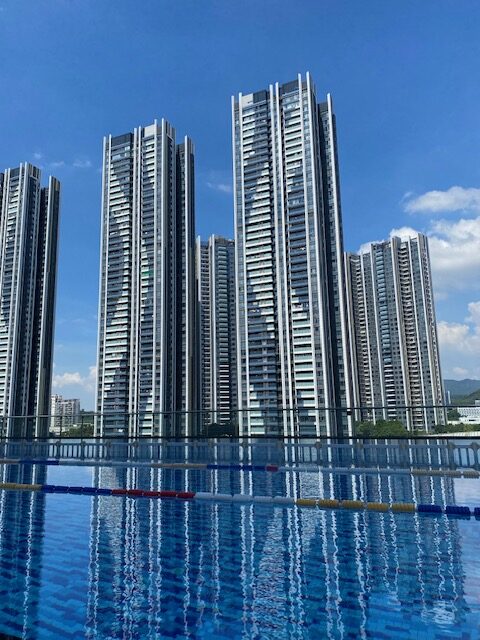
Once we finally entered China—see my last blog—Shenzhen hit us like a wake-up call. A good one. Glass towers, tech startups, and shopping malls that seem to stretch forever. It’s modern China at full speed—fast, flashy, and fascinating.
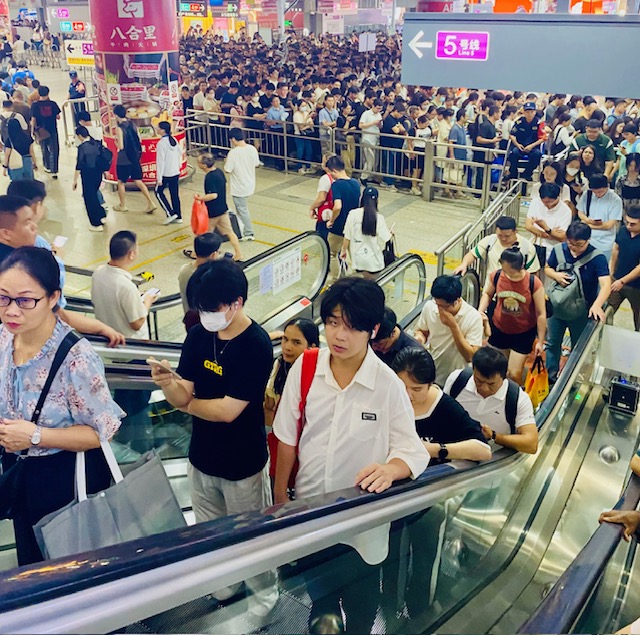
I walked miles in malls that locals seem to live in—not just for shopping, but for high-end food courts, educational hubs for children, and coffee shops where grandparents hang out while babysitting. Modern life at its best, clean beyond belief. This city that grew from 50,000 to 20 million people is the last 50 years, never feels crowded, unless you find yourself at peak hour in the subway.
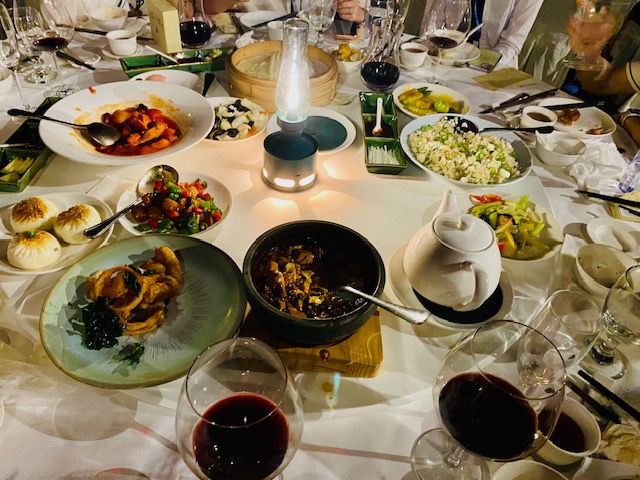
One highlight of this visit was dinner at Laurel Restaurant, an outdoor paradise with tree-lined tables around a misty lake and seemingly endless dishes of incredible food.
Hong Kong
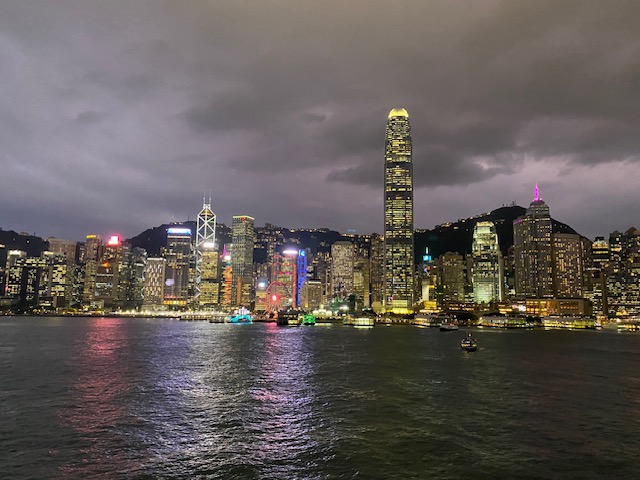
Just 40 minutes from the border of China is Hong Kong, where we boarded our ship. Hong Kong is… wow. Skyscrapers tower over streets that never sleep, neon lights reflect off wet sidewalks, and the smell of food hits you before you even see it.
A tram ride up to Victoria Peak, 1,800 feet above the city, gives you a bird’s-eye view of a metropolis that is modern and traditional all at once. We wandered into Stanley Market, a treasure trove of jewelry, food, and handmade ornaments.
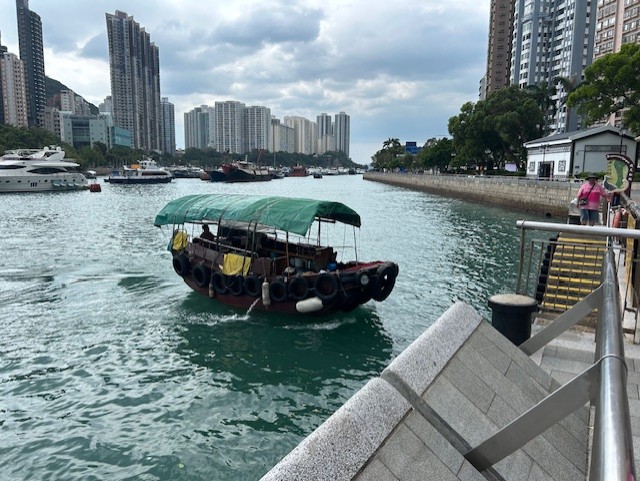
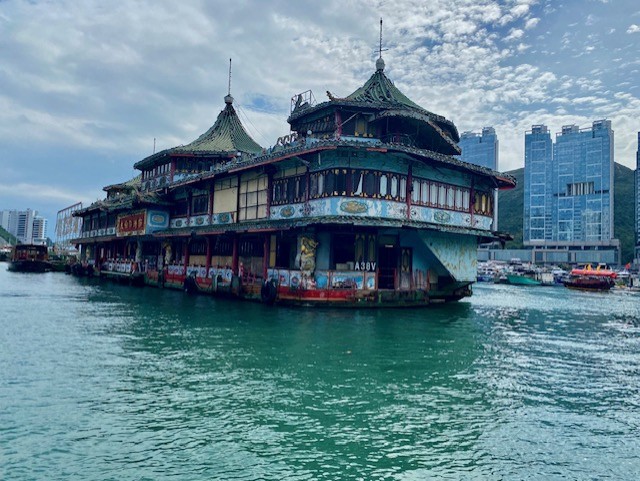
We also cruised on a traditional sampan through a floating village, where locals live on fishing junks. Hong Kong is chaotic, brilliant, and absolutely unforgettable.
Ha Long Bay, Vietnam
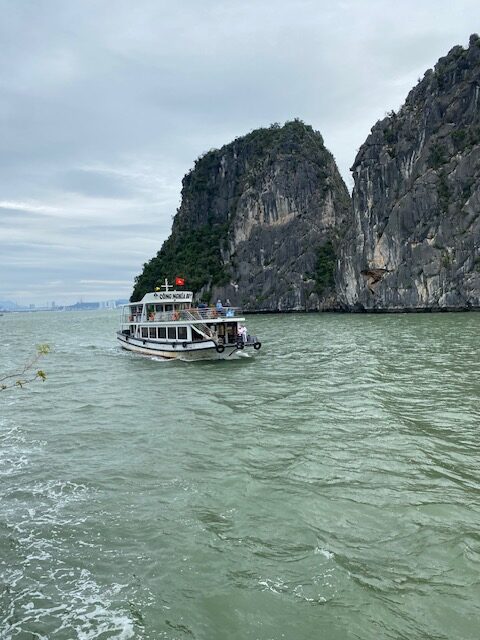
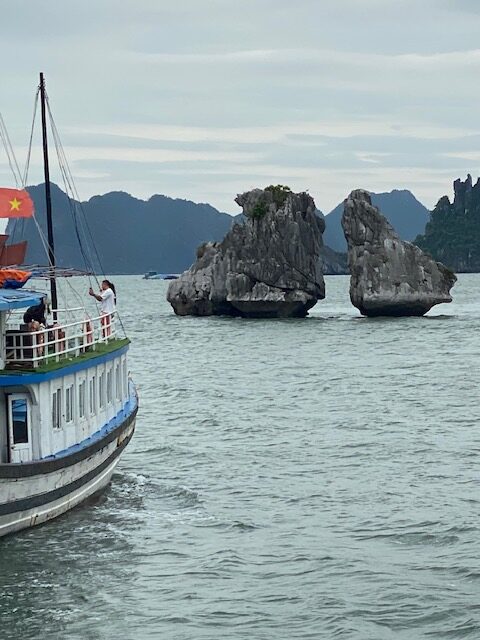
Next, we headed to Ha Long Bay, and suddenly, the chaos faded. A UNESCO World Heritage Site, its emerald waters are dotted with about 2,000 limestone islands. Legend says dragons created them to protect the shore. There’s a quiet magic here, a sense that nature has been perfecting this view for millions of years—and it shows. We sailed to Kissing Rock, which, to me, looked more like kissing chickens—but I’m no rock expert, so I’ll leave that description to the professionals.
Huế, Vietnam
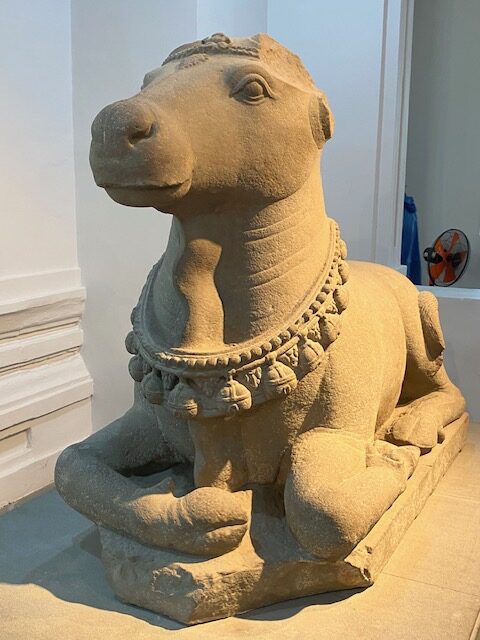
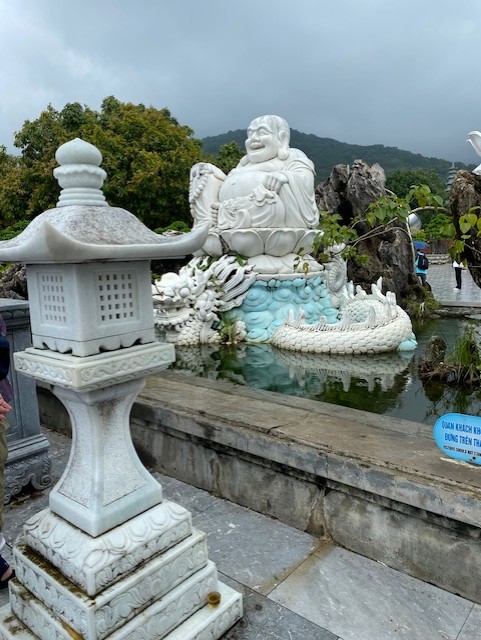
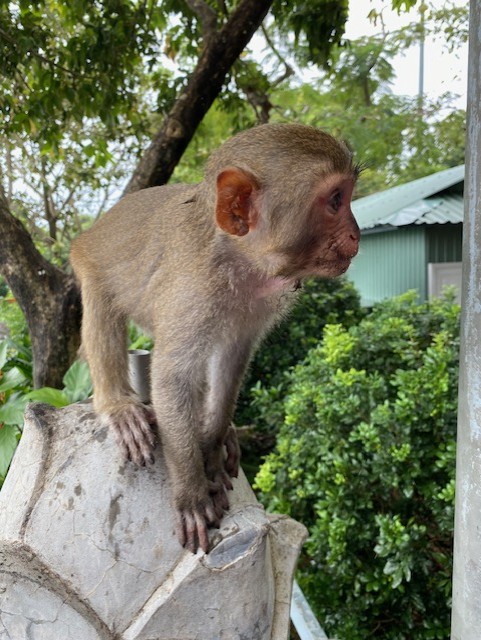
From Ha Long, we traveled south to Huế, Vietnam’s imperial city. Walking through old palaces and temples feels like stepping into history. Huế has a reflective, almost meditative vibe, inviting you to slow down and notice the details—ancient walls, quiet lakes, and the lingering smell of incense. The Linh Ung Pagoda blends traditional and modern Vietnamese architecture, where visitors can play with the very friendly monkeys running around the park. The Da Nang Museum of Cham Sculpture houses works dating back to the 4th century, reflecting the Hindu faith.
Hanoi
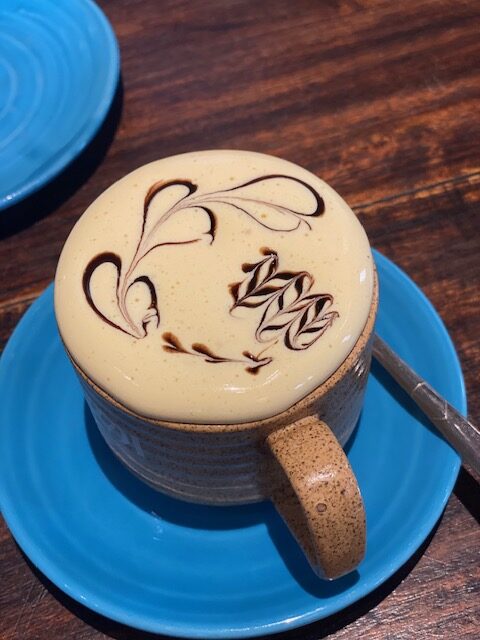
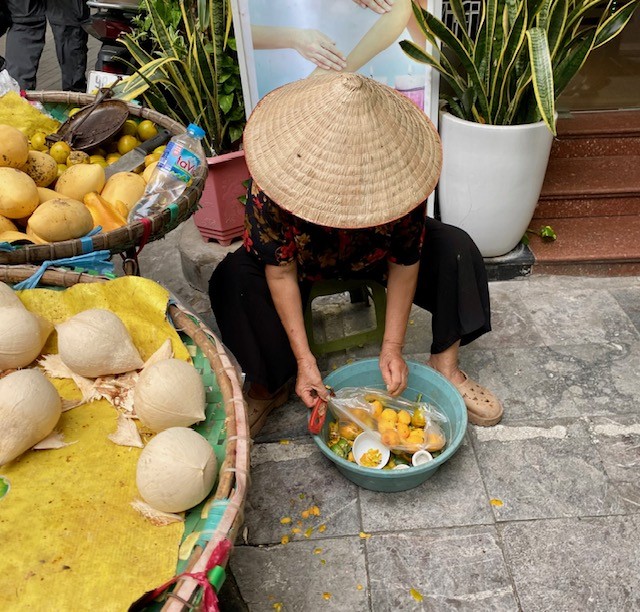
Hanoi, in contrast, is slower, more deliberate. Old streets lined with small shops, street-side cafes serving egg coffee, which I learned to make in a workshop, and serene lakes give the city an unusual charm.
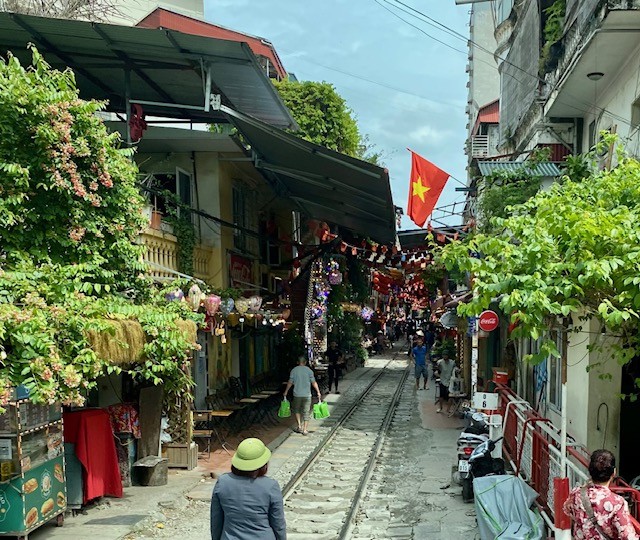
There’s a quiet resilience here—history etched into every building, alleyway, and lake. The city doesn’t try to impress; it simply exists, and you can’t help but notice. Every corner feels lived-in, like people have been doing the same thing for decades, and somehow, it all works. But the buzz and noise is still real as you can feel on Train Street, where working trains going back to the main station pass within inches of your face.
Ho Chi Minh City (Saigon)
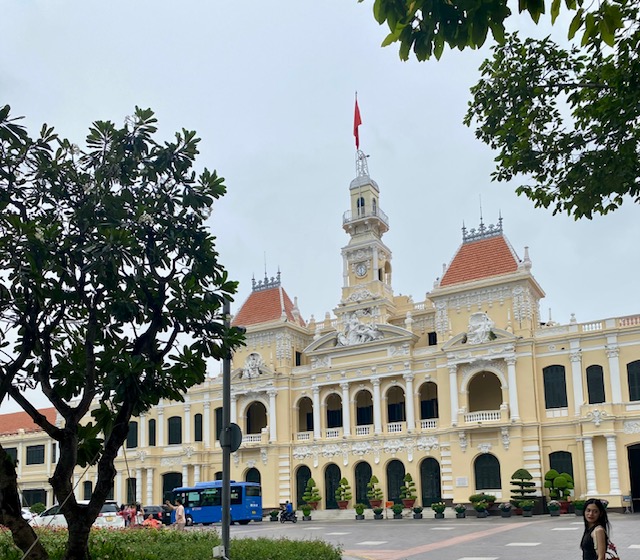
Then it’s off to Ho Chi Minh City, a city that moves at the speed of its motorbikes. Walking through Saigon is like being inside a heartbeat: fast, chaotic, and completely alive. Motor scooters zoom by like angry bees in a choreographed dance where no rules exist, yet somehow, it all works.
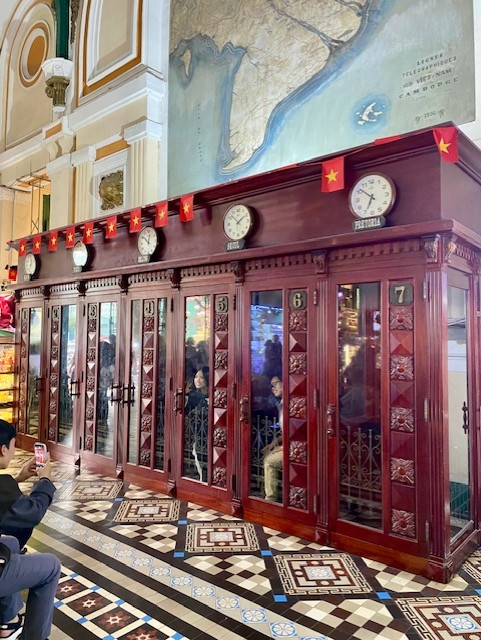
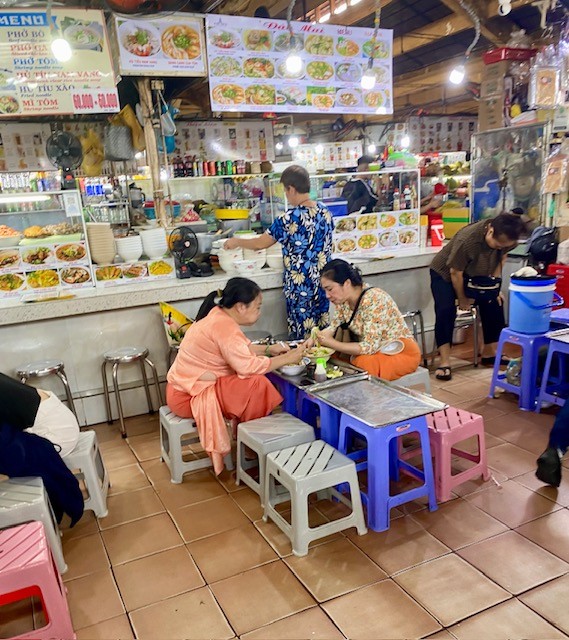
Originally a fishing village, it is now Vietnam’s largest city, a perfect blend of Vietnamese and French culture. French baguettes fill the bakeries with their yeasty aroma, the opera house mirrors Paris’ Petit Palais, and the grand Central Post Office was designed by Gustave Eiffel—yes, the Eiffel Tower guy. Street stalls smell like sizzling meats and sweet sauces, while the buildings tell stories of colonial times.
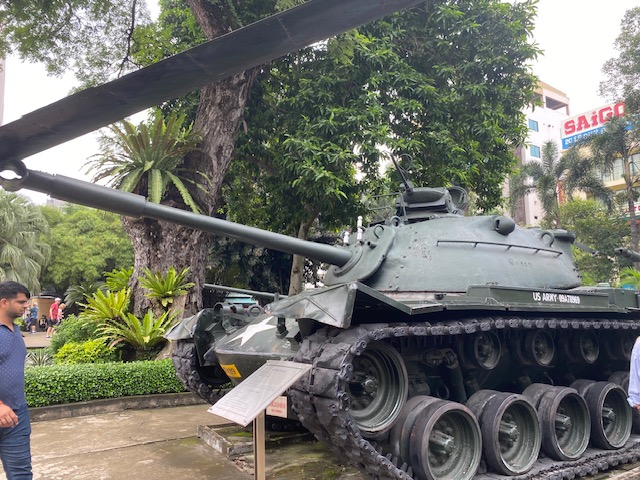
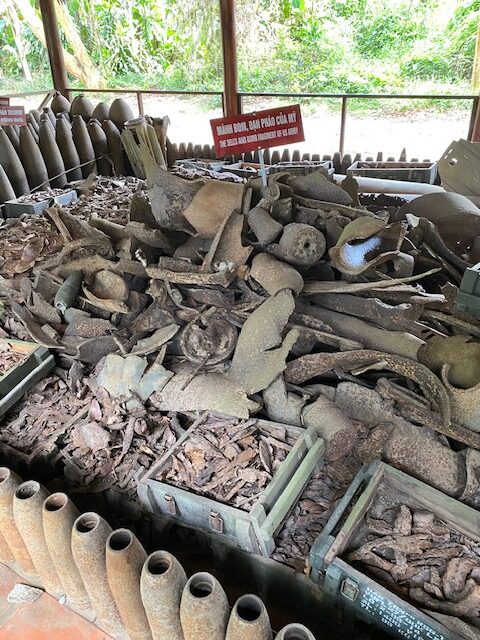
But next to all this beauty is the reality of war and what is left of it. A visit to the War Remnants Museum is an important but grim reminder of the horror and pain of war for all.
The Tunnels (Cu Chi)
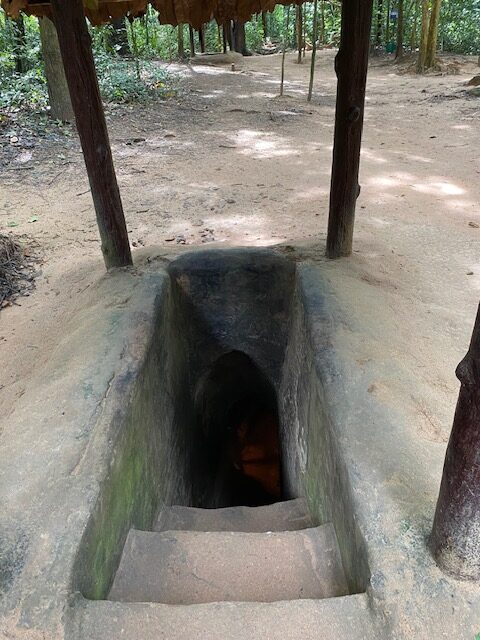
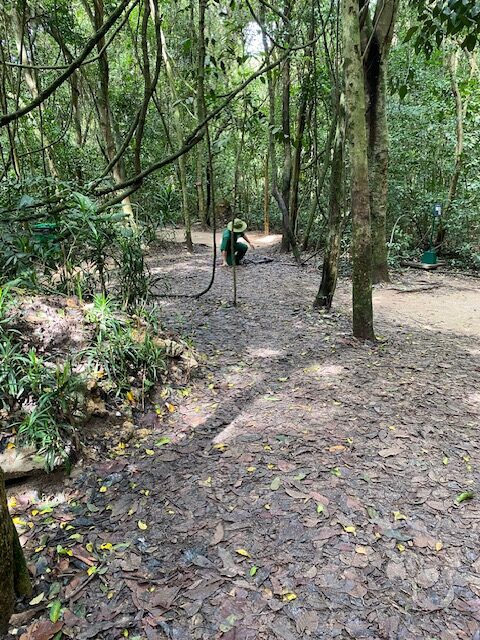
We broke from our cruise schedule and made a side trip to Cu Chi tunnels with a local guide, Luc, who ended up being a history buff and a wealth of knowledge. He asked if we wanted to go to the regular tourist tunnels or ride a bit further and see the more legitimate ones. Of course, you already know what the answer was. We rode through fields and fields of rice paddies and arrived in a pretty desolate area. Old army planes and bomb exhibits all around. The experience was humbling, sad and a bit scary. War is not a pretty thing. Crawling through narrow, dark passageways, you get a glimpse of the ingenuity and resilience of people during the war. It’s tight, a little intimidating, and incredibly eye-opening—a stark reminder of what survival can demand. Coming out, I felt exhausted, sad, but deeply grateful to experience this piece of history firsthand.
Sihanoukville, Cambodia
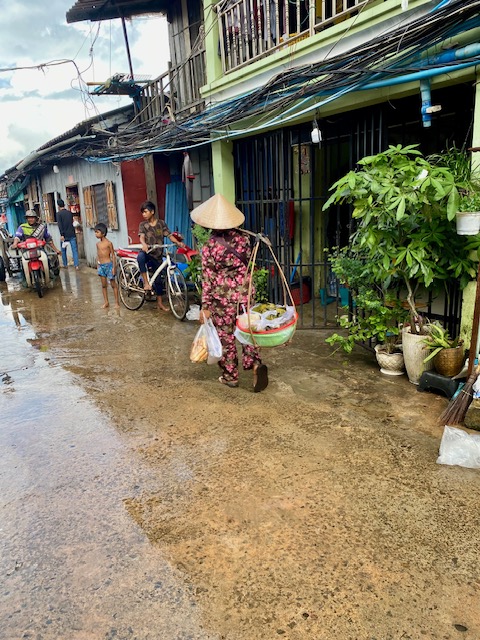
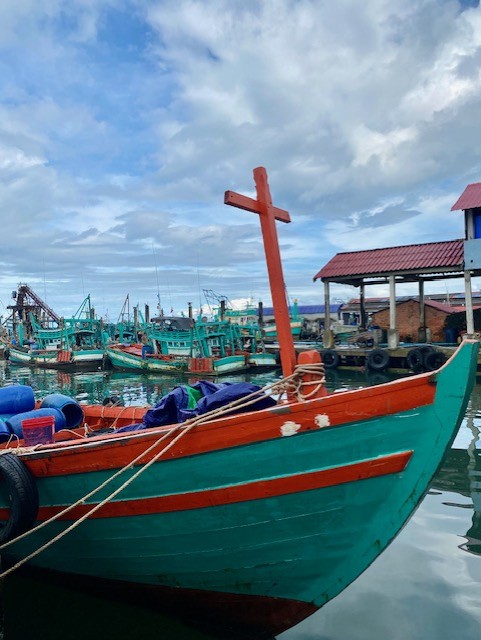
Finally, we reached Sihanoukville. The morning began with a visit to a fisherman’s village—colorful, pungent, and buzzing with activity. The poverty was unmistakable; people work hard for almost nothing. Tourists like us took the chance to photograph the vivid hues of the fishing boats, all while being surrounded by barefoot, curious children, which added a quiet sadness to the scene.
Then the rain came without warning. As we waved goodbye in our disposable orange, yellow, and blue raincoats, we looked like a group of gummy bears disappearing down the road.
The city is known for its beautiful beaches, but the city all around was a bit desperate. The many now dilapidated buildings around were originally constructed to make casinos but the idea didn’t take and now they are either empty or full of people running call centers. Yes, the same ones who send text messages and emails telling you a prince left you millions of dollars and you should send your bank information.
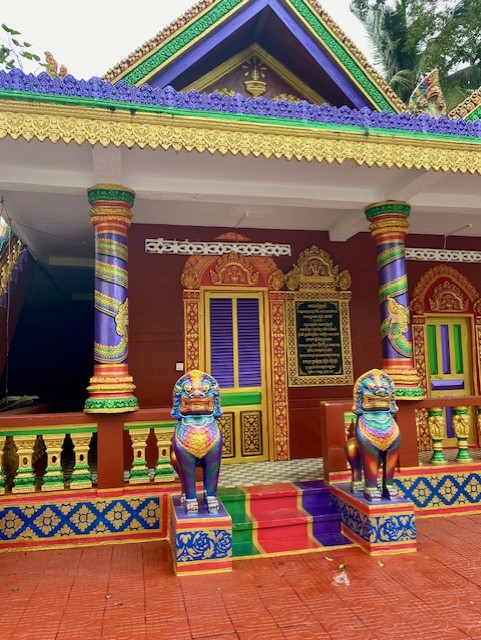
A group of tuk tuk vendors (here they are motorized, not bike driven) accosted us and after a bit of negotiation, we hopped into “Bob’s” vehicle. The motor wouldn’t start, but Bob didn’t give up. Other vendors stood by and watched the commotion, hoping to steal his clients. Like a stuck lawnmower, the engine turned and turned until, finally, it roared to life. We made it up the hill in this coughing, sputtering machine and visited Wat Krom, a beautiful, although empty temple at the end of a vendor-lined street where children sold handmade good-luck bracelets.
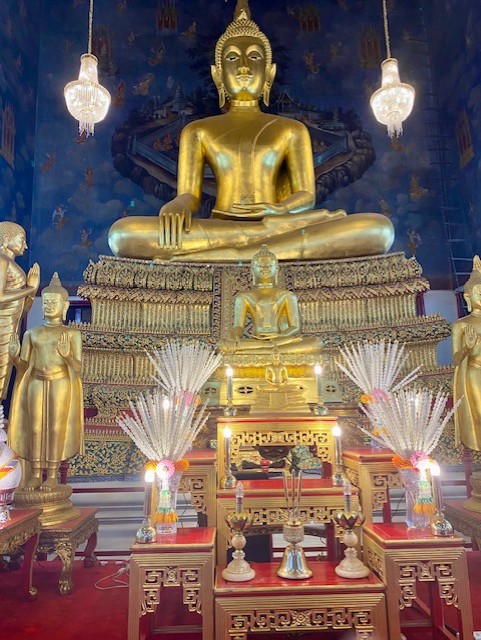
Bangkok
Bangkok is sensory overload. On the edge of the Chao Phraya River, golden temples sit beside congested streets, street food smells mix with exhaust fumes, and tuk-tuks dart past like sparks in the dark.
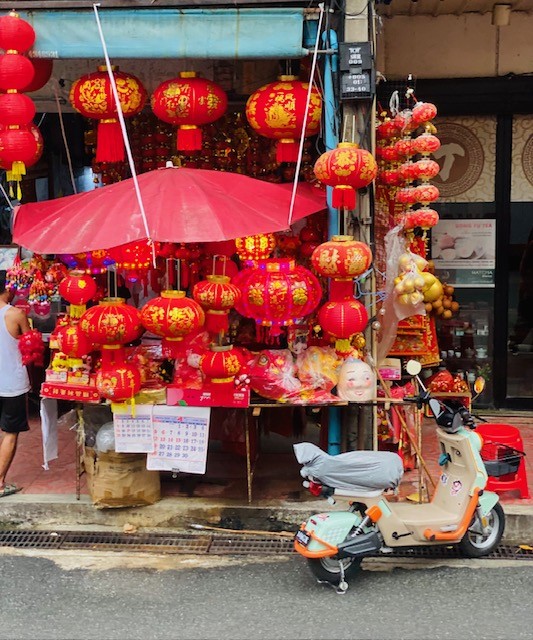
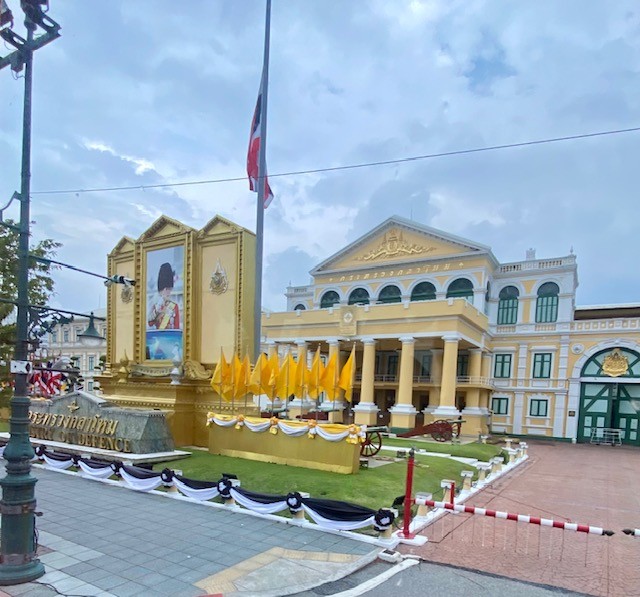
The city is alive, noisy, spiritual, chaotic, and indulgent all at once. Chinatown is extensive and colorful. You eat, sweat, bargain, and marvel—and somehow, it all works. The chaos itself becomes the experience. The Grand palace was not open for visits because the much loved Queen Mother had just passed away. No matter where you looked, businesses, schools, restaurants or other palaces, beautiful memorials were in place to honor her. The city was draped in black and white satin. Royalty is important here, and pomp and circumstance is real.
Overall
This journey isn’t all about postcard moments, it’s about contrasts. Beauty next to harshness, joy next to regret, overindulgent food next to poverty, all surrounded by history and tradition. You don’t leave unchanged. Hong Kong’s energy versus Ha Long Bay’s calm, Saigon’s joyful chaos versus Hanoi’s quiet streets, history and beauty intertwined at every step. Southeast Asia is messy, magical, and impossible to forget. And I can’t wait to go back!