I travel a lot. My husband is a scientist—an expert in obesity who speaks at conferences around the world. I tag along, notebook in hand, watching every detail and keeping notes for my next blog. Friends tell me I’m lucky, and I am. When I’m not on the road with him, I run wine tours—guiding people through rolling vineyards, teaching them how to taste a place, not just drink it.
But travel isn’t always the dream people imagine. It’s delays, lost bags, the dull ache of jet lag that transforms you into a street zombie. It’s feeling at home and nowhere all at once. And this last trip—to my husband’s conference in China—reminds me just how beautiful and brutal travel can truly be.
Atlanta. One hour late for departure, and the 11 p.m. red eye is already circling in delay mode.
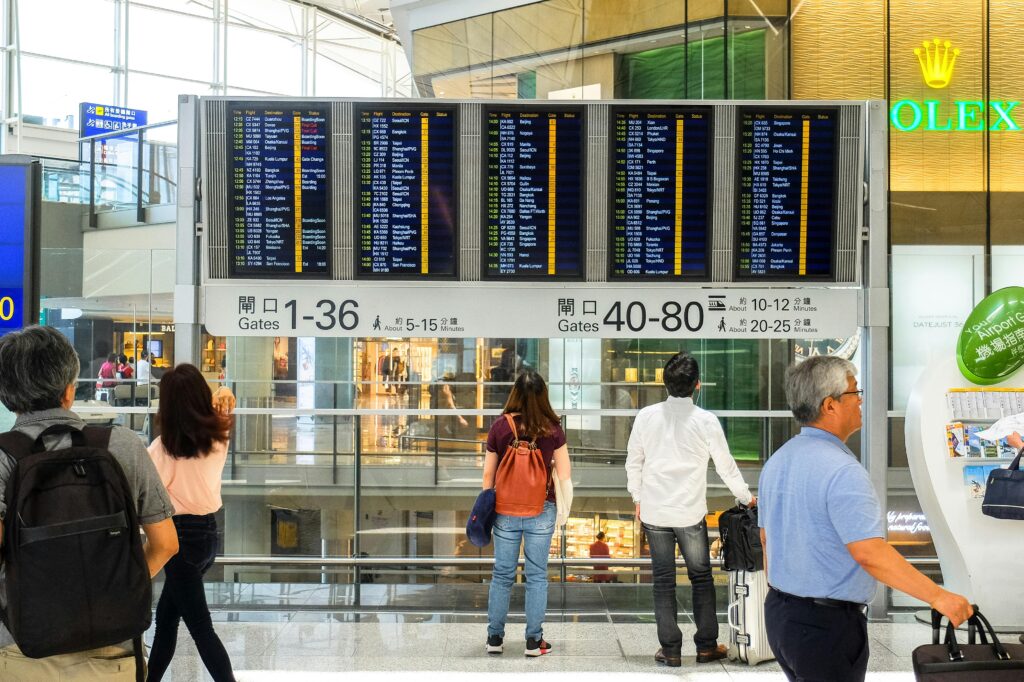
You can feel it- that collective look in the passengers’ eyes realizing the night’s going to be long. Nervous eyes are watching the clock and the gate agent, who’s pretending his keyboard work is a matter of national security — typing like a surgeon in mid-operation, just to avoid eye contact with the mob. No one wants to be the one to snap, to end up on a viral YouTube meltdown at midnight in Atlanta. We finally board, and it’s smooth, almost too smooth. Most of the people on this flight are headed to Korea — flawless, pore-less skin, K-pop fashionable clothing, efficient, quiet, perfectly choreographed boarding. No elbows, no chaos, no passive-aggressive overhead-bin wrestling match like you get on domestic flights.
Trouble in the cockpit.
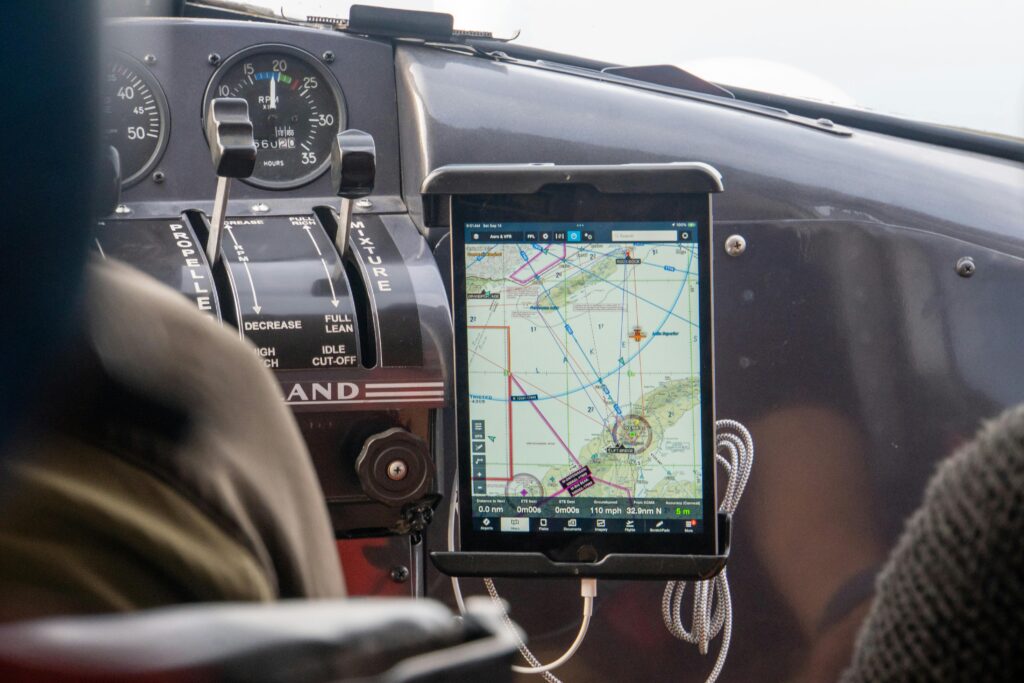
I settle in and start flipping through the in-flight entertainment when the neon jackets show up — mechanics, crawling in and out of the cockpit like ants at a picnic. Something about a radio that won’t cooperate. Eventually, they fix it. Then the pilot chimes in — “Folks, this is the captain speaking” in his unmistakable, recognizable velvet-smooth pilot voice (do all pilots practice this voice?). “We are stuck waiting for clearance”. Government shutdown, fewer air traffic controllers. Something about getting on the grid. More bureaucratic jazz.
By the time the delay drags into the next hour, the pilot drops the dreaded news: crew’s out of time and regulations say they have to stop working. We deplane. Three hundred people, quiet, polite, exhausted, stranded in an empty terminal that feels and smells like metal and concrete. Lost in translation, and still in Atlanta.
The collective march to nowhere.
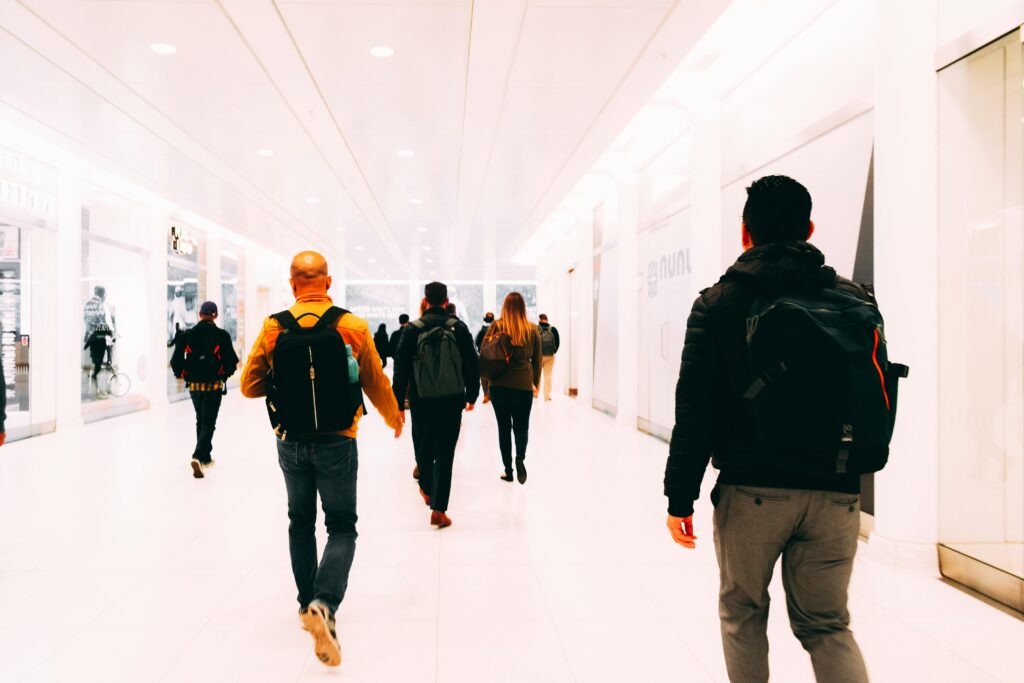
It’s 2 a.m. when they tell us the flight’s rescheduled for 9 a.m. Exhausted grumbling all around. The hotels they’ve arranged are miles away, so we go to the taxi terminal. No connecting train to the exit, not at this hour. Just a silent march through Hartsfield-Jackson’s deserted hallways. We follow the crowd for what seems like miles, a long march to the solitary exit. Some guy comments to me that the official hotels are too far — he is going to the airport hotel. We decide to follow him. A stranger’s voice that somehow makes more sense. We end up on the MARTA train (connecting the airport to hotels), four strangers rattling toward the two nearby hotels still operating. The first one is full. We rush to the Marriott and there are a few rooms left. Quick check in, no, we don’t care what kind of room we get, we crash for what feels like fifteen minutes.
Morning. Déjà vu. Going through security again. The same gate. The same faces, only more defeated. Some decided to forgo the airline offer of a hotel room and slept in the cold but quiet terminal, thin blue airline blankets wrapped around them. Empty water bottles and coffee containers spread all around.
Finally, 15 hours and 40 minutes of uneventful flying later, Seoul. Follow up with a four-hour layover that seems dreadful, but we know the final prize is near-we are getting closer to our destination.
The reward for the pain.
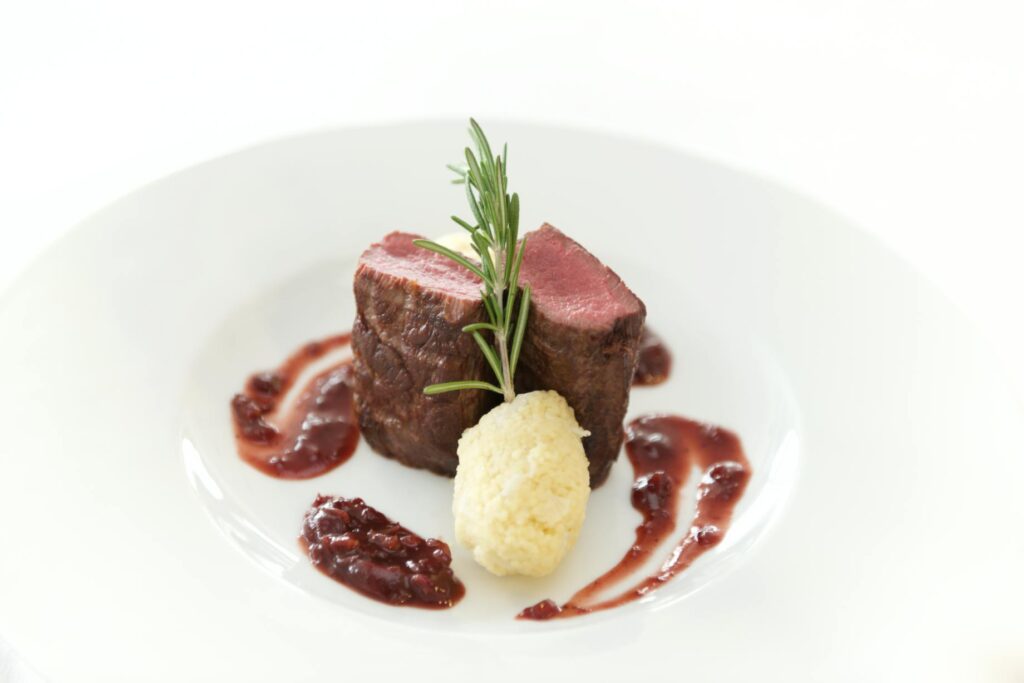
And then — an unexpected upgrade. First class on Korean Air. The attendants appear in mint-green uniforms, starched and serene. One asks how I want my filet mignon cooked — on a plane! I want to laugh, but when the plate arrives, it’s perfect. Real silverware, proper wine. I look at my husband who skipped the meal and is sleeping with exhaustion, and I enjoy my moment with a perfect steak. At 35,000 feet, somewhere over the Pacific, life feels, well, good. The Atlanta fiasco seems to be so far away.
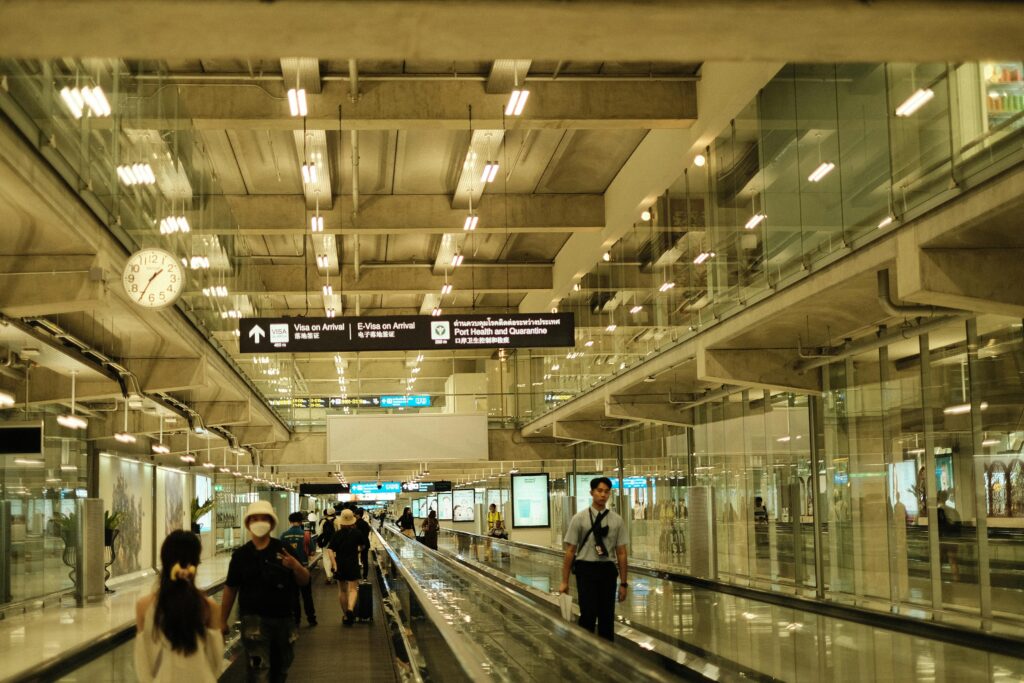
Hong Kong, 10:45 p.m., twelve hours late from our original arrival.
The conference driver is miraculously there, holding a sign with my husband’s name, all is well. He loads the bags in the car, glides confidently through the night to the border checkpoint and drops us off promising he will be on the other side waiting. He seems to know what he is doing. Then — chaos finds us again.
Turns out the visa-free entry we’ve been told to use doesn’t exist here. The officers stare blankly. Ten minutes to closing. We’re escorted into a small room like misbehaving kids. No one got the memo about the visa waiver, and no one can speak the other one’s language well enough to communicate. The driver’s vanished into the mainland, unreachable. It’s almost midnight, and the air feels heavy, humid, final. I have never felt so close to turning back.
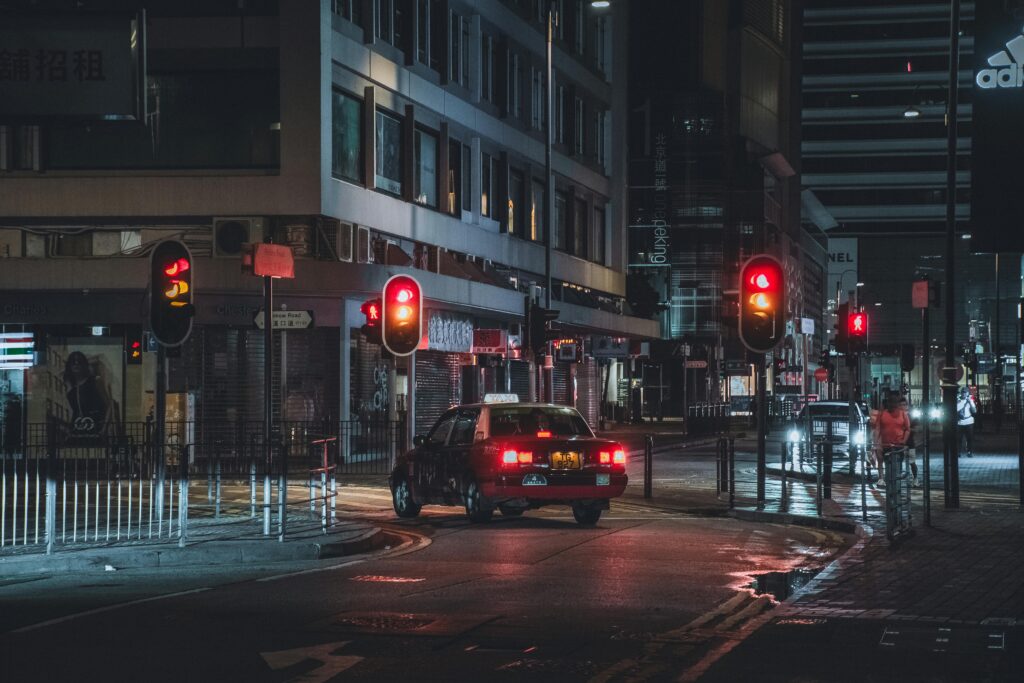
A taxi to nowhere.
A woman officer takes pity- probably because of the look of fatigue and uncertainty on our faces. Wrong entry port, she says. The right one opens at 9 a.m. She scribbles the name of a “cheap” hotel on a post it, waves us toward the last taxi on earth. Non-English-speaking driver, dirt roads with no lights. But we have no other option at this point, the cheap hotel it is. We take off to an unknown location, with a random taxi, we have no other choice. Movie scenes gone wrong appear in my head. Then, the phone rings — the conference “emergency” contact says to turn around, go back to the airport. The phone is held to the driver’s ear, put on the speaker phone, in a surreal moment of shouted translation and hand gestures. He turns around.
We make it back to the airport, my WeChat app that I dutifully researched and loaded before the trip doesn’t work. This is a cashless, cardless society, only apps are used to pay. With no other option, we finally offer dollars — the taxi driver grudgingly takes it, no other choice for either party. We find the airport hotel…and it is full. Again, more calls. Finally, our original driver appears, smiling like this is all part of the adventure. Daggers are coming off my weary, bloodshot eyes. We bounce through three more hotels before we find a room downtown. It’s 3:30 a.m. I could cry or laugh — I’m too tired for either.
9:00 a.m. We’re waiting in the lobby, there is no time for coffee, just the restless urge to get to Shenzhen. A new driver appears, and this one actually seems to know which border crossing to take. He drops us off and promises to be waiting on the other side. Of course he does. We watch him take off, pick up our bags and go in with high hopes.
Another border, another bump in the road.
No one has a clue about the five-day, 140-hour visa-free entry so well documented in official websites, so here we go again: “Try to get a visa.”, they say, “at the entrance booth”.
The visa office sits wedged between a construction site coated in dust and a duty-free shop pumping out French perfume. About 10 people are milling around the kiosk, anticipation on their faces. A woman ahead of us says she does this all the time, it’s just the way it is. We fill out more forms. She hears her name called; rushes to get her visa and thanks the officer like she’s just won the lottery. A group of Costa Ricans are also applying for the coveted entry visa. Normally, I’d be swapping travel stories with them, but here — surrounded by the shriek of an electric drill and the sickly-sweet haze of perfume at 9:30 a.m. — we’re all fighting for ourselves. I have no small talk left in me.
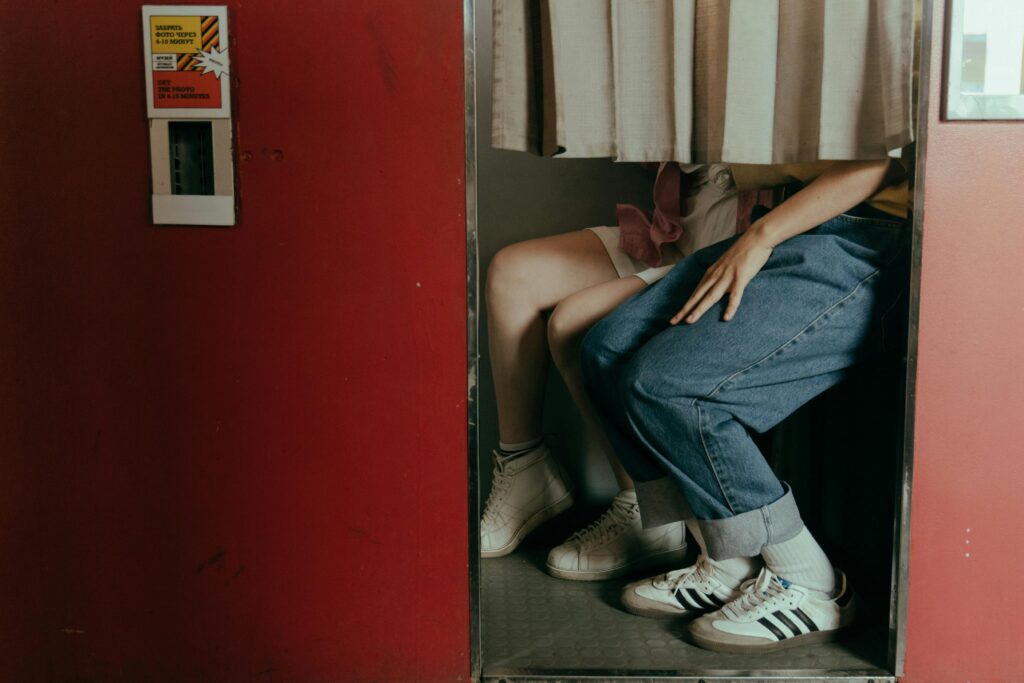
The very young officer wears his authority like armor. He asks every question already written on the application, as if testing whether I’ll slip up, like I might be hiding endangered turtles in my luggage. We get grilled again, take new photos in the mandatory photo booth — of course there’s a photo booth — and after what feels like hours, the sound we’ve been waiting for: the visa stamp. Yes, it’s the five-day, 140-hour visa no one seemed to know about before.
We’ve won the lottery too. We grab our passports and rush through immigration before anyone can change their mind.
Our driver’s there. Smiling. Always smiling. He takes us to the hotel, and nothing feels better.

Lessons learned.
My phone? Useless. My provider plan won’t connect to the WeChat pay app. Gmail, WhatsApp, Facebook, Google — all ghosts behind the Great Firewall. I buy a local SIM, a travel e-SIM, a VPN, an internet pass — nothing works. It’s like being cut off from the rest of the world.
I wander through the city in digital exile. No way to buy coffee, no way to catch a subway or hail a taxi. I eat at the hotel because it’s the only thing I can do. Finally, someone mentions Alipay — the other less used, less popular pay app, another chance. I upload my passport, my credit card, my soul, probably. And it works. A tiny victory in the land of invisible walls. I make my first purchase…the cup of coffee takes like heaven!
But somewhere in there — in the sleepless night in Atlanta, the luxury in the sky, a cab ride to nowhere, the unexpected chaos at the Chinese border — there’s the truth of travel: it’s hardly ever neat, never seamless, sometimes difficult. But when it’s over, and you’ve survived it, you already start to miss the madness and you remember the beauty of the places you have crossed and the people you have seen. And you start planning your next trip.
2 comments for “Atlanta to Shenzhen, China — A Comedy of Delays, Dazed Wanderers, and Filet Mignon at 35,000 Feet”