
Mexico City is a wonderful, enormous, and sometimes overwhelming city of more than 9 million people. The greater metropolitan area is home to nearly 22 million residents, making it the largest city in North America. There are over 150 museums! From historic landmarks and beautiful parks to incredible food and lively neighborhoods, there is always something to discover.
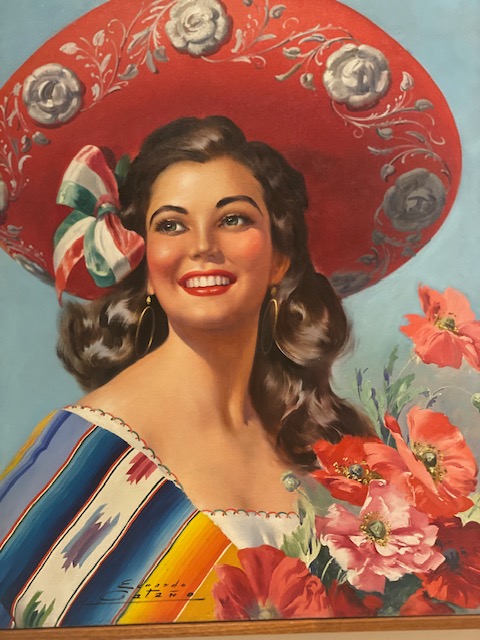
But Mexico is huge, so to make the most of my trip, I used my usual plan of attack. I put together my “must-see” list (hoping to cover at least 75% of it, I organized everything by neighborhoods so I wouldn’t waste time crisscrossing the city, and I made sure not to over plan—I left some open space in my itinerary so I could follow recommendations, wander into places that caught my eye, or simply enjoy unexpected discoveries. Some of my favorite moments came from those unplanned detours.
My list for Mexico City
Frida Kahlo Museum (Casa Azul) – Buy tickets online well in advance. They often sell out days or even weeks ahead. Watch the movie Frida before you go.
Palacio Nacional – Don’t miss Diego Rivera’s magnificent murals depicting the history of Mexico.
National Museum of Anthropology – One of the best anthropology museums in the world.
El Califa de León – The first taco stand to receive a Michelin star.
Sears Café (8th floor) – Go for the coffee and one of the best views of the Palacio de Bellas Artes.
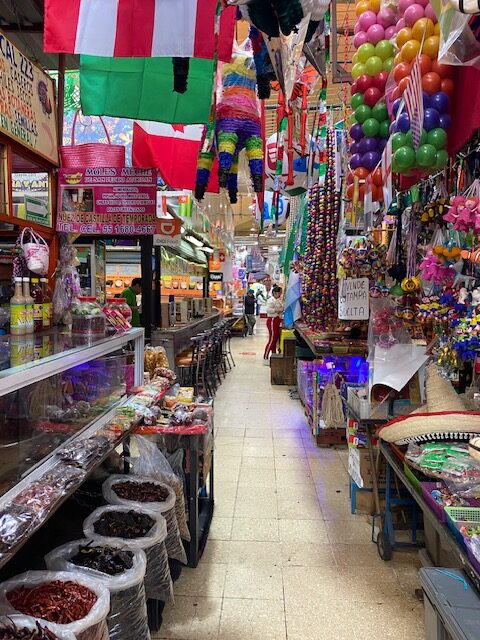
Mercado de Coyoacán – One of many markets in Mexico City and a great place to experience local food and culture.
Contramar – One of the city’s most famous and best seafood restaurants.
Eat tacos al pastor – Inspired by the vertical-spit roasting methods of Lebanese shawarma brought to Mexico, think of it as a Mexican kabab taco. Delicious.
Catedral Metropolitana – The largest cathedral in Latin America.
El Zócalo – The heart of Mexico City and one of the largest public squares in the world.
Mercado at Alameda Central- oldest public park in the city.
Palacio de Bellas Artes – One of the city’s most beautiful buildings, inside and out.
El Balcón del Zócalo – Great food with spectacular views overlooking the main square.
Casa de los Azulejos – The famous “House of Tiles,” known for its beautiful architecture and historic charm.
Museum of Modern Art – A nice complement to the Anthropology Museum, featuring Mexican and international artists.
Museo Soumaya-the silver twisting façade with a large collection of work by impressionist artists such as Monet and Degas. This time it featured an incredible number of works by Rodin as well as Miro, Dali and Picaso.
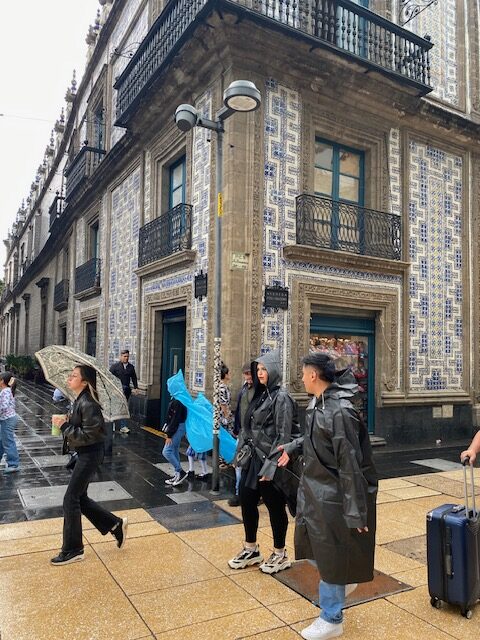
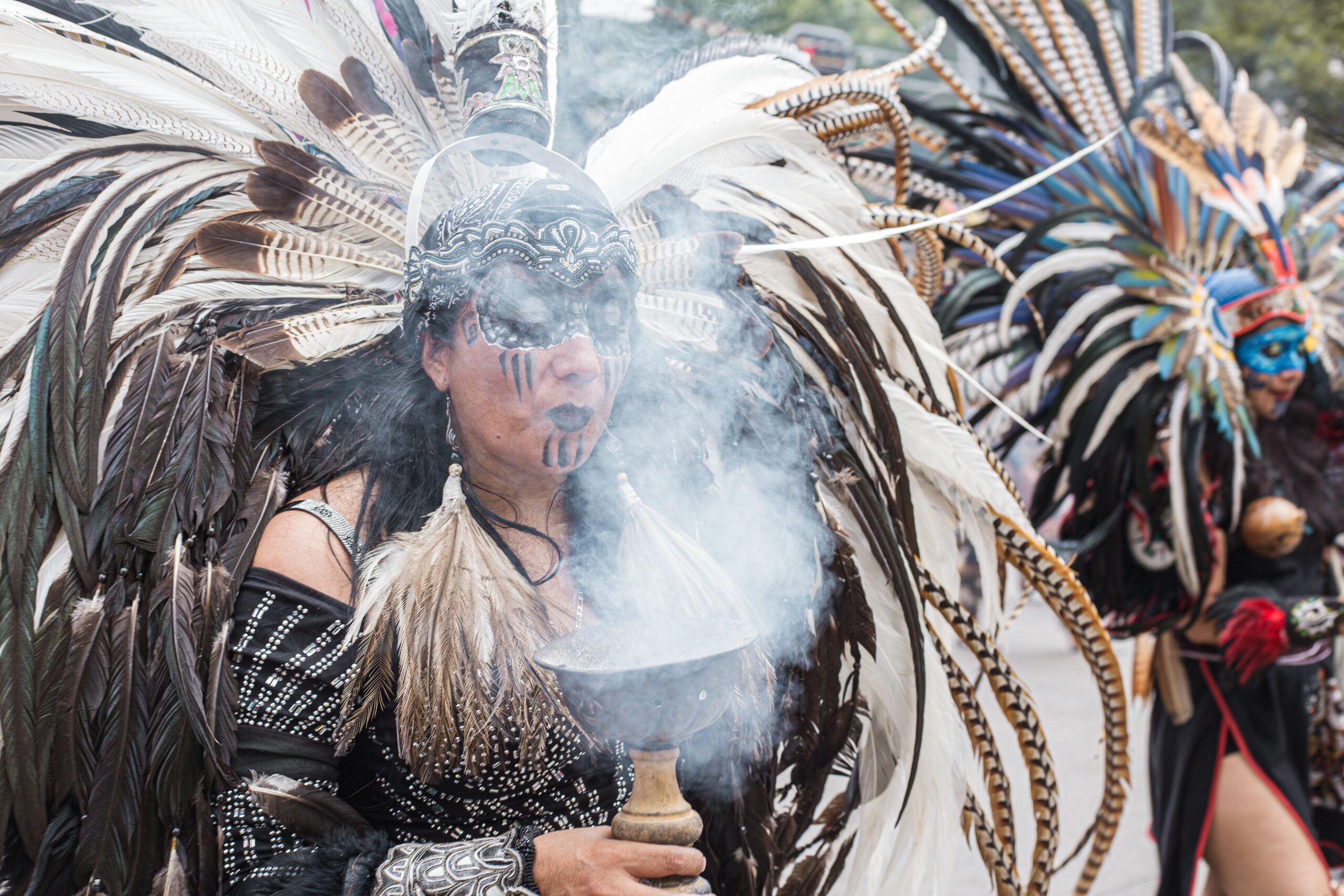
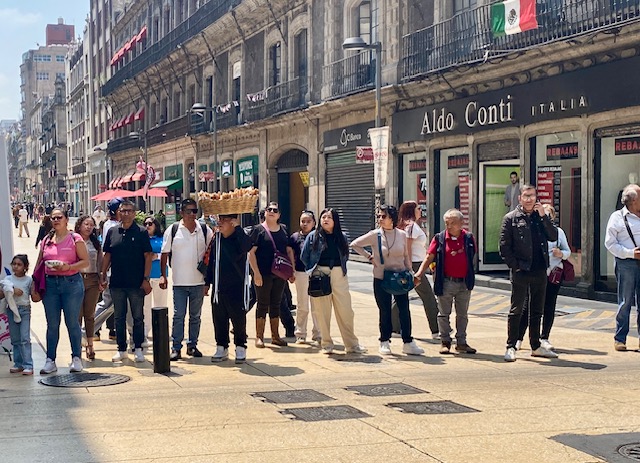
Upon arrival, torrential rain greeted us. We headed straight to the historic center, the Zócalo. While walking to the main square, we passed the Casa de los Azulejos, with its blue and white tiled walls, a reminder of architecture in Portugal. Despite the weather, the center was full of life. People were everywhere, yet it was surprisingly easy to get around. The Chamanes burning sage and doing the spiritual cleansing of the tourists. The vendors selling umbrellas, ready for the downpour business. The churro vendor balancing large baskets of sweets on his head. The tangible World Cup atmosphere reigned even when Mexico had been already knocked out of the running.
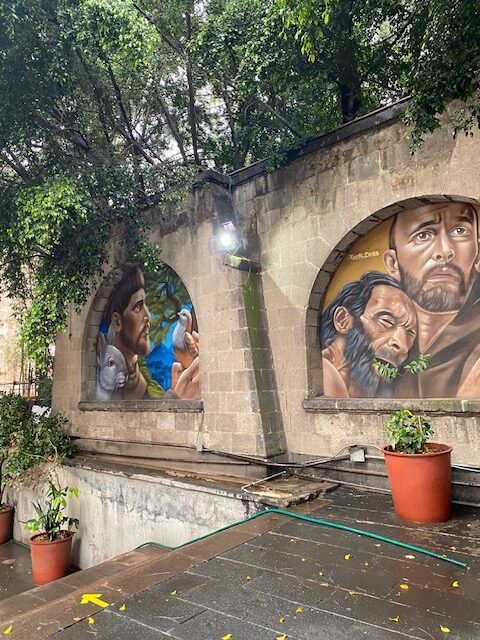
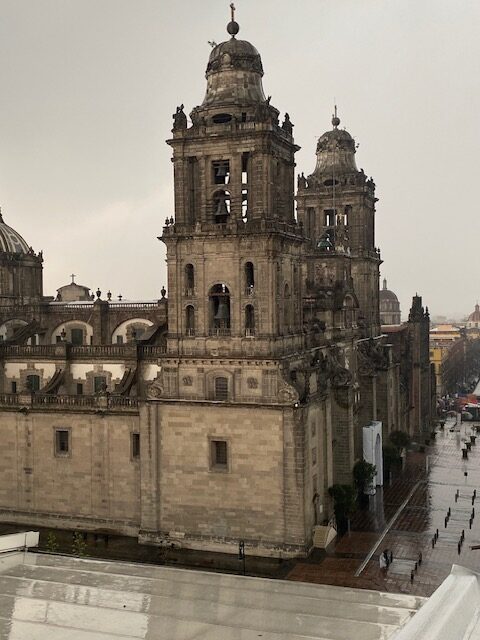
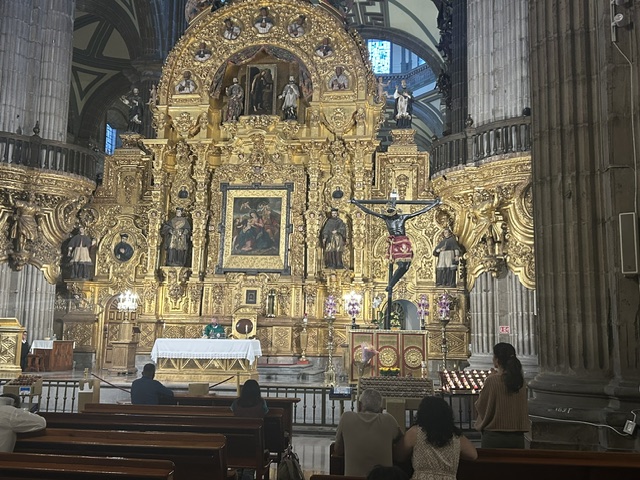
The arcades around the enormous square were lined with gold and silver shops, making the area feel like jewelry central. At the most unexpected street or alley, beautiful murals from artists, well known or not, appear on the walls. The majestic Metropolitan Cathedral, famous for its Black Christ, the interior of the building filled with enough gold to rival the vaults of the Swiss National Bank.
Then the rain got even harder, the storm didn’t look like it was going to let up.
A young man wearing a semi-official badge approached us and asked if we wanted to have lunch at a restaurant with a view. We figured this was a good idea since we were getting soaked, so we followed him. He led us through the entrance of one of the jewelry stores, up a staircase, and into a casual restaurant with a balcony overlooking the Zócalo. The view of the cathedral and the bustling square below, even under the rain, was spectacular.
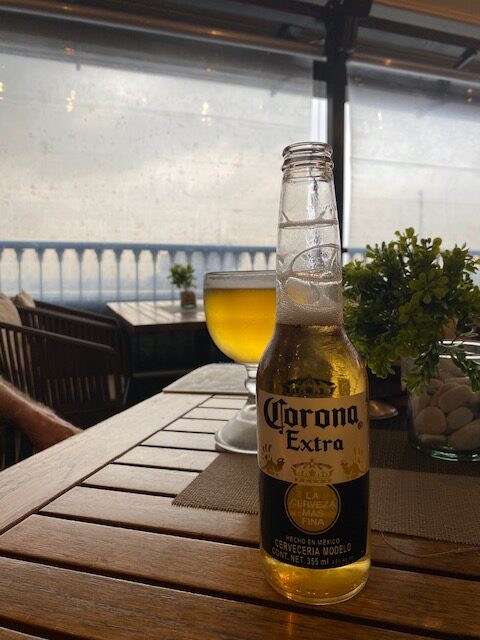
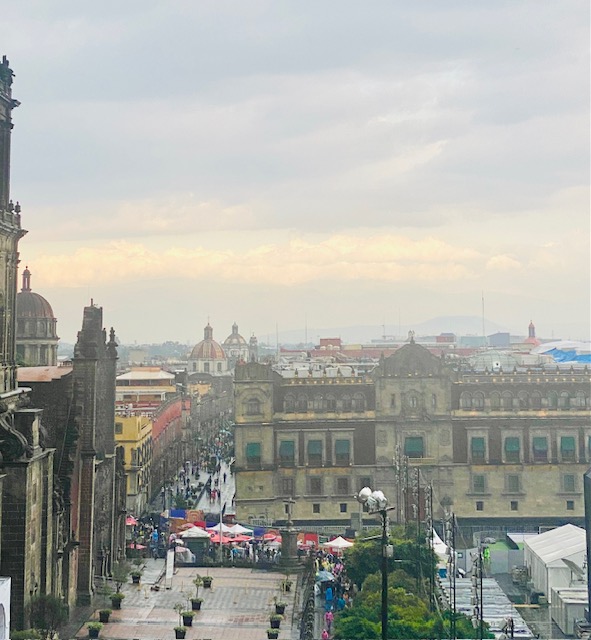
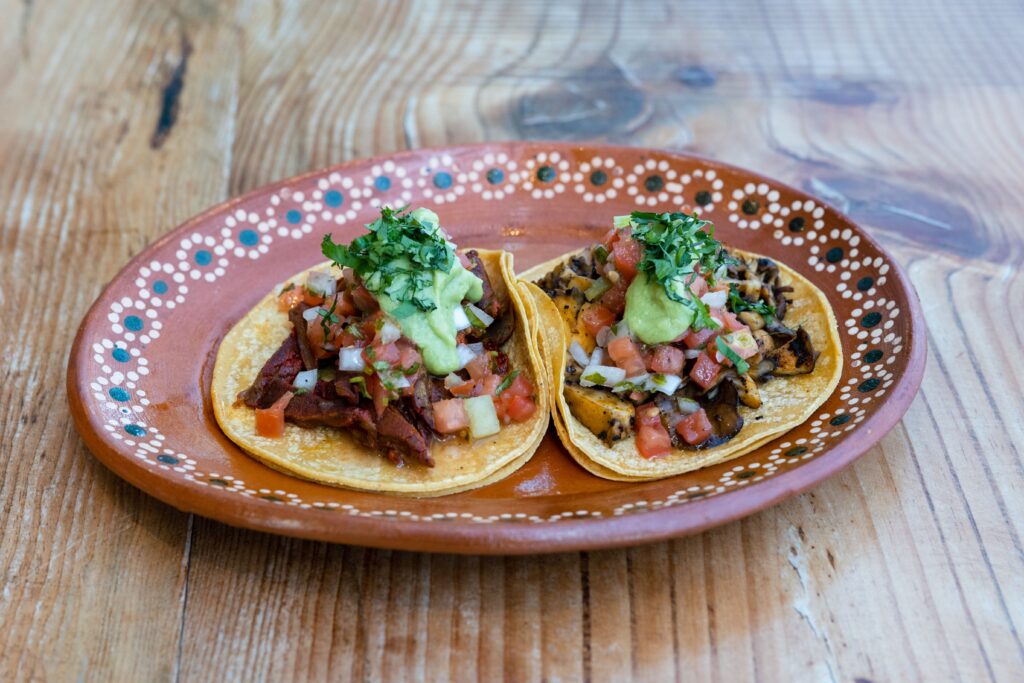
As we waited for the rain to pass, we enjoyed cold beer and some delicious tacos al pastor, the specialty. Without even trying, I had already checked several items off my Mexico City must-do list.
That evening, we took an Uber to the San Rafael area, a working-class neighborhood. Surrounded by clothing vendors, street food stalls, and everyday life, we found El Califa de León. The restaurant, or street stall, is named after Rodolfo Gaona, the legendary Mexican bullfighter.
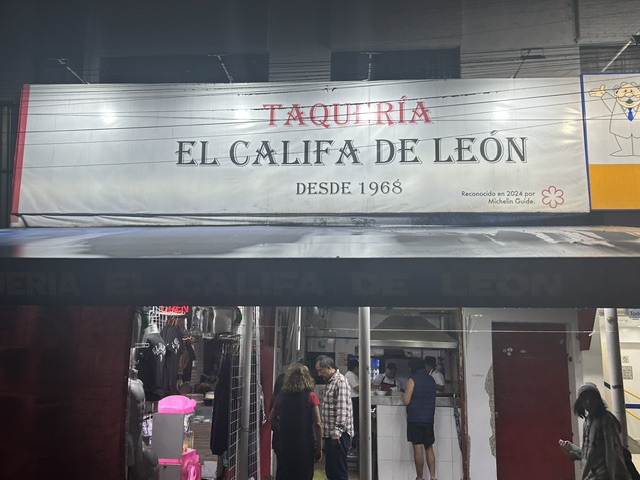
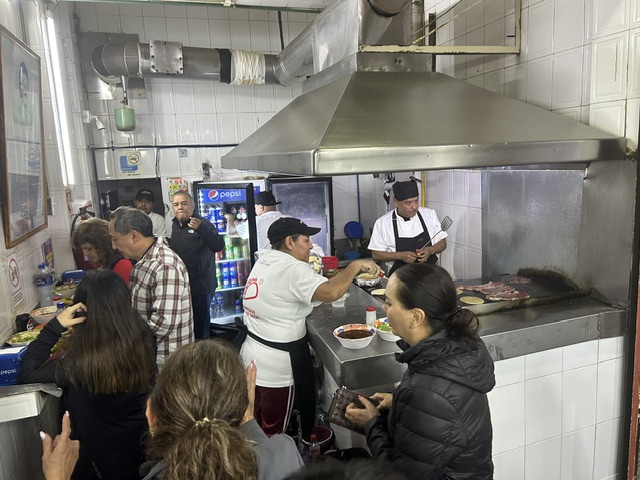

The set up couldn’t be simpler. A short, middle-aged woman balanced on a step stool so she could reach the grill, expertly flipping fresh tortillas as fast as she could make them. Next to her, the chef grilled the marinated meat to perfection before placing it the warm, soft tortillas. You can order water or sodas, no beer or alcohol is served.
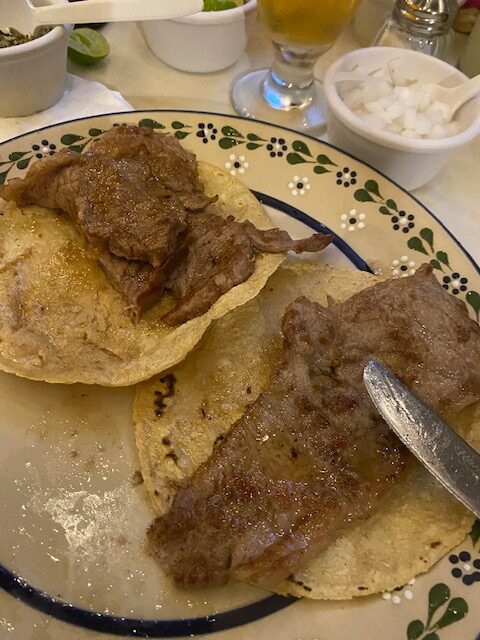
I asked him about the Michelin star they received in 2024—and still proudly hold. He smiled and explained that only two of the five tacos on the menu earned the distinction: the Gaonera, made with thinly sliced rib-eye seared in beef fat, and the Costilla, made with rib meat. That’s it. The only seasoning is a little salt and a squeeze of fresh lime. No salsa, no onions, no cilantro—just outstanding meat and perfectly made tortillas.
There are no tables, but that’s part of the experience. For a small tip, you can “borrow” a plastic table from the men’s underwear vendor next door. Small bowls of green sauce that has seen its better days are there for the taking but the tacos are perfect without any additional flavor.
So, there we were, surrounded by rows of brightly colored red, neon green and blue Speedo-style underwear hanging from the walls, eating on paper plates, drinking bottled water and enjoying one of the cheapest and best Michelin meals. Our bill was the equivalent of eight dollars.

In the morning we headed to the colonial style Coyocan neighborhood to the Frida Khalo Museum, the Casa Azul. Prior to the trip we watched the movie “Frida” and it made the experience so much richer. Frida’s life is so vividly portrayed in the cobalt blue house where she lived and it is so touching to find out so much about her tragic and colorful life and how it influenced her art. Her spirit still lives here, and this is a must for any visitor.
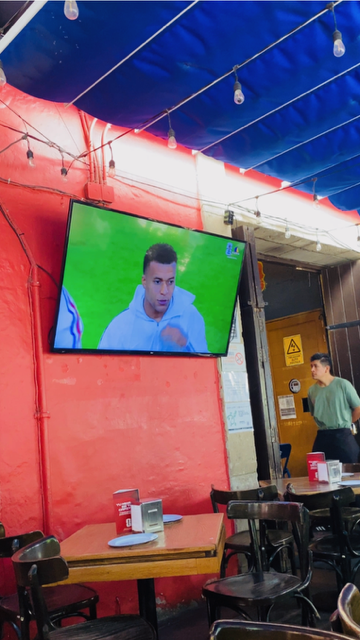
Next, we strolled through the Mercado de Coyocan where you can find local crafts, souvenirs and food in an ultra-friendly and relaxed atmosphere. Lunch was in a casual restaurant around the Jardin Hidalgo where I had the best Elote: grilled corn on the cob, covered with mayonnaise, Cotija cheese, chili powder, and a squeeze of lime. The place was full of local World Cup fans, many wearing the French soccer uniform and rooting for Les Bleus, my beloved French team, who unfortunately lost the game.


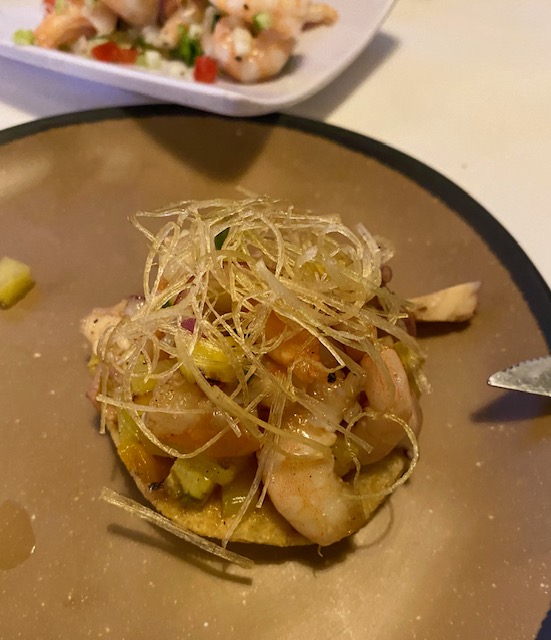
That evening we headed to the Roma neighborhood, known for its Art Deco architecture, art galleries, and lively atmosphere. We stopped by Plaza de España, which, much to my dismay, was filled with expats celebrating their soccer victory over the French team. Dozens of police trucks lined the alley, droves of police wearing riot gear. It was not necessary since the atmosphere was mostly festive, I wasn’t going to fight them. I took it in stride and quickly found comfort at our dinner at Contramar. (Reserve well in advance.) This upscale yet relaxed restaurant is famous for its seafood, especially the tuna tostadas and the whole grilled fish served with two different sauces. It was, the best meal of the trip. In a small act of defiance, I ordered French wine despite the loud celebration outside.
The evening was still young, so we walked over to Alameda Central, where hundreds of vendors were still open for business. Street performers entertained anyone willing to stop, while families with young children wandered through the park enjoying the festive and safe atmosphere and the perfect evening weather. It was one of those places where you can appreciate the real heart of Mexico.
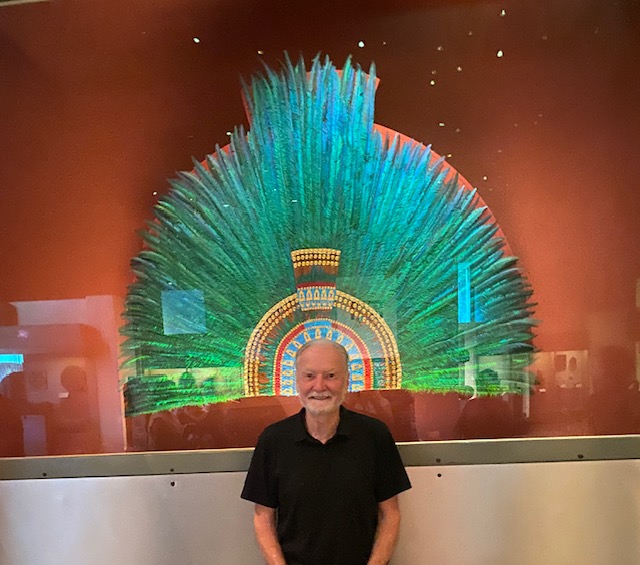
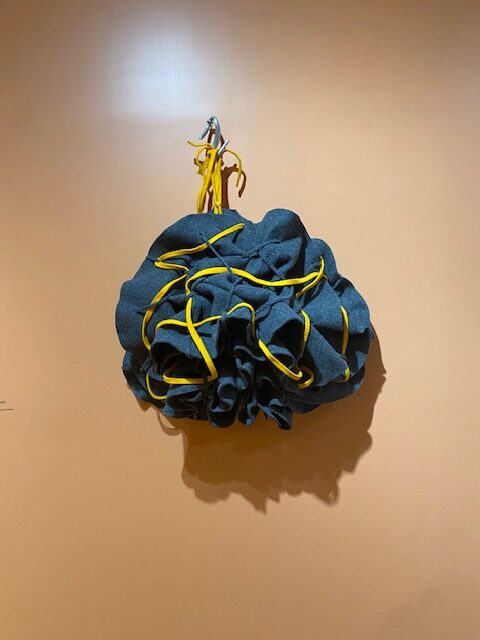
I’m not really a museum person. I know I can’t read every single sign or admire every artifact, and even if I did, I probably wouldn’t remember most of it a few days later. Instead, I like to wander through the exhibits, stop at the pieces that really catch my eye, and take in the overall story. For fun, mostly in modern museums, I also look for the least attractive or ridiculous piece (I call it “what where you thinking”). It makes the visit much more enjoyable and a lot less exhausting.
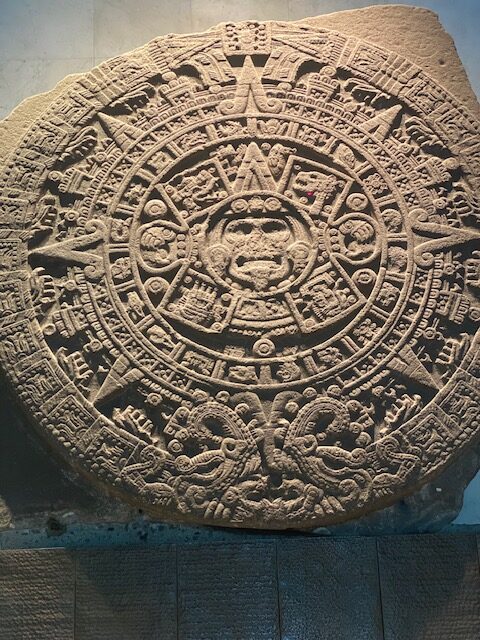
The National Museum of Anthropology, is located in Chapultepec Park (Bosque de Chapultepec). At 1,700 acres, it is one of the largest and most beautiful urban parks in the western hemisphere. The Anthropological Museum is very large but I had my list of three things to see that I would remember: the Aztec Sun stone, the Maya exhibits and the Moctezuma’s Headdress (Replica). The original is found in Austria and there is much controversy about getting it back. I was happy to see all three.
A short walk through the park takes you to the Museum of Modern Art. Smaller, well organized, and much easier to take in, it was a nice change of pace. The museum features works by Frida Kahlo, Diego Rivera, and other renowned Mexican artists. It was a relaxing visit, and I even managed to take a few fun photos in the modern area that still make me smile.

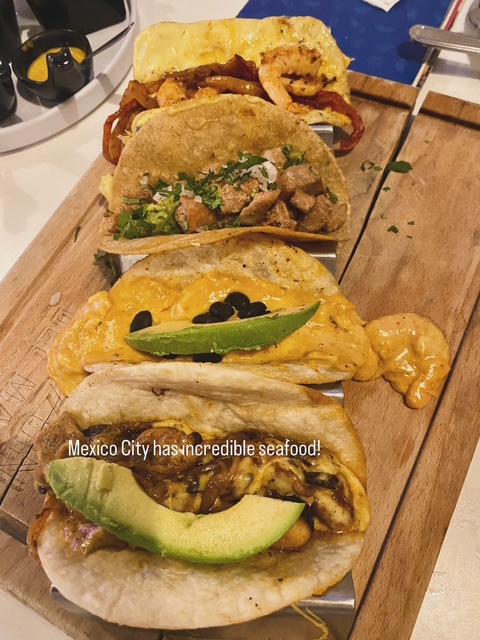
For those of you who know me, you know I don’t like Mexican food in general. But eating in Mexico is a different experience. The food is served in a way to show off the actual fresh products, not covered in the fake yellow cheese or meat that tastes the same no matter what you select. There are over 11,000 taco stands in Mexico City alone. You have to be good in order to compete. Dinner was in Napoles, close to our hotel at a local restaurant, Corazón del Mar. This ended up being another excellent local seafood restaurant and rather than ordering full entrées, we decided to sample several appetizers. The portions were so generous and delicious that we never got around to ordering anything else.
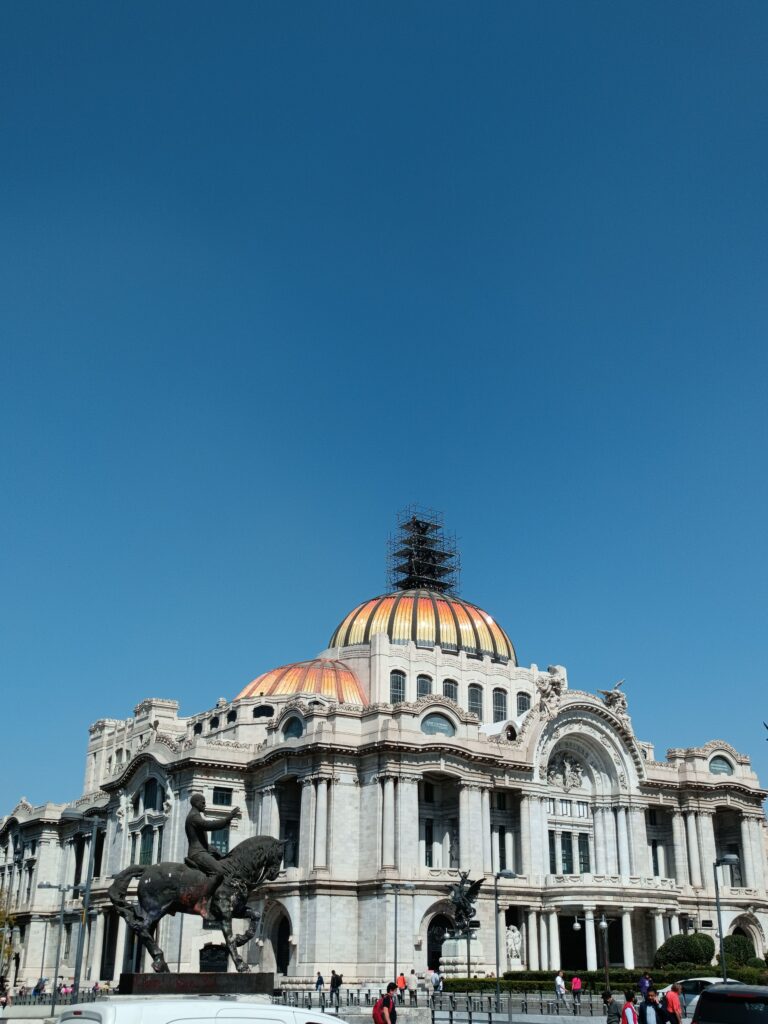
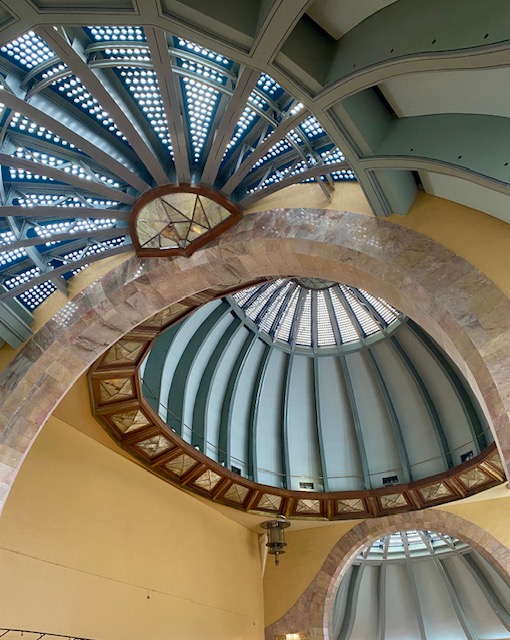
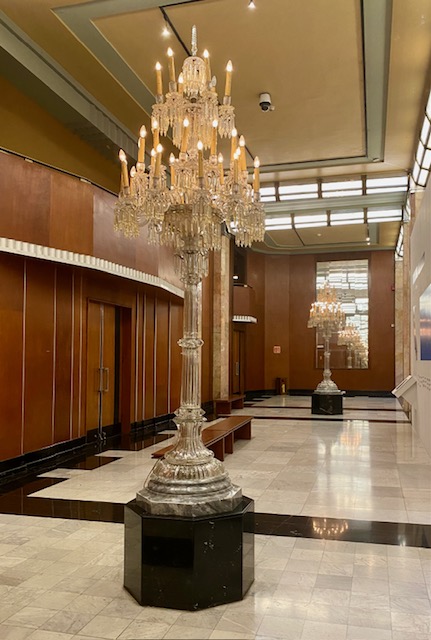
On our final day, we couldn’t leave Mexico City without visiting the Palacio de Bellas Artes, widely regarded as the city’s architectural masterpiece. This magnificent palace, combining French Art Nouveau and Art Deco styles, is home to spectacular murals, world-class performances, and rotating art exhibitions. Even from the outside, the building is breathtaking.
We finally make time for the Soumaya Museum—its striking silver façade was simply too beautiful to resist. Best of all, admission is free. Inside, the museum houses an impressive collection ranging from works by Rodin, Miró, and Picasso to masterpieces by many of Mexico’s most celebrated artists.

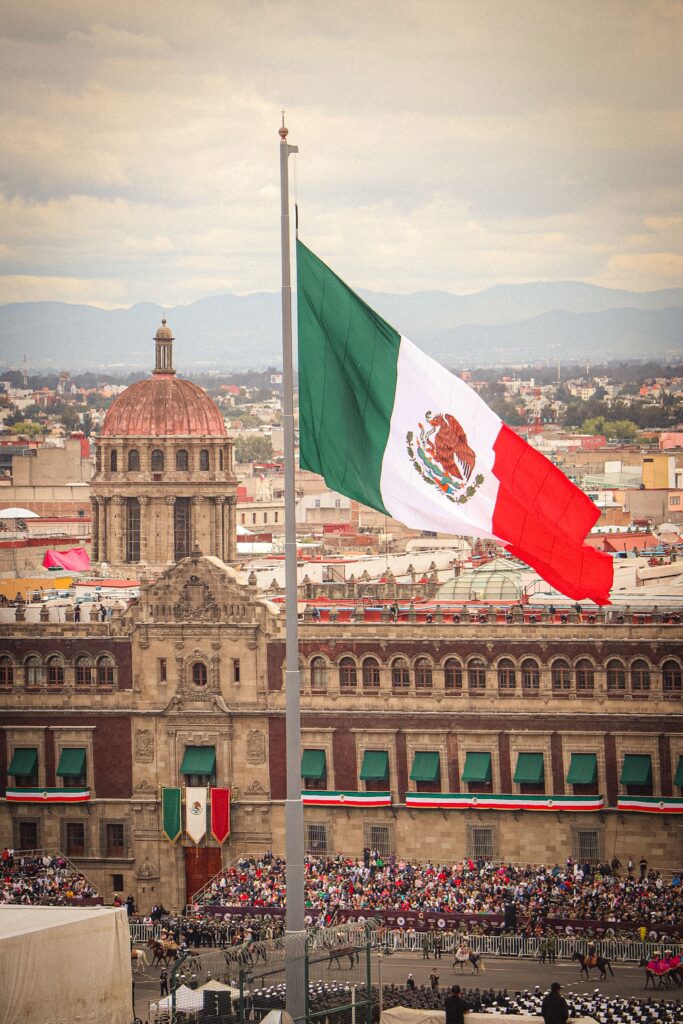

Our last stop was the Palacio Nacional, the official seat of the President of Mexico and one of the country’s most important historic buildings. Security is understandably very strict, but the one-hour guided tour is free-you simply need to register with your passport. The highlight of the visit is Diego Rivera’s monumental mural, The History of Mexico, a masterpiece that took years to complete and vividly depicts the nation’s history from pre-Hispanic times to the twentieth century. During the tour we also learned about the fascinating—and somewhat gruesome—origins of pozole, Mexico’s iconic soup. According to what we were told, pozole is believed to have been prepared by the Aztecs for sacred religious ceremonies using the flesh of sacrificed captive warriors. That story alone is enough to capture everyone’s attention. The mural is so large and so beautiful that I named this my favorite sight of the trip.
As a first-time traveler to Mexico City, I was pleasantly surprised. If you are looking for the Cancun or Cozumel experience, this is not it. This is not the typical place where tourists pose with sombreros and drink never ending tequila shots, although I imagine you can find this somewhere. This is a real city, full of professionals going about their business, families living their everyday life, friendly vendors who love to talk to you about how they make their goods. The city is home to more than 150 museums, countless excellent restaurants, and neighborhoods full of character. Tourists are warmly welcomed, street vendors are friendly without being pushy, and overall prices are very reasonable, making Mexico City an outstanding destination. Mexico City turned out to be one of those places that leaves you wanting to come back and explore even more.
Travel Tips
- Use Uber. It is widely available, inexpensive, and even works from the airport, despite what some taxi drivers may tell you. We were repeatedly told that Uber was not allowed at the airport, but that was simply not true. Unless there is no other option, avoid taking taxis in the city, as tourists are often overcharged.
- Going to Xochimilco? If you plan to take a traditional trajinera boat ride through the ancient canals, ask your Uber driver to take you directly to one of the public boat launches in the town (embarcaderos), not to the commercial area where many tourists are dropped off. We ended up there by mistake and found inflated prices, no opportunity to share a boat with other visitors, and rows of nearly empty cafés—a good indication that neither locals nor experienced travelers choose this area. Going directly to the town launch offers a much more authentic experience, with fairer prices and a livelier atmosphere.
- Learn to bargain- It is expected that you negotiate the prices with vendors, it’s part of the game.
- Safety- We never felt “unsafe” at any time but normal precautions when traveling are a must and use your common sense.
- Learn some words in Spanish- This will take you a long way, most people do not speak English.